
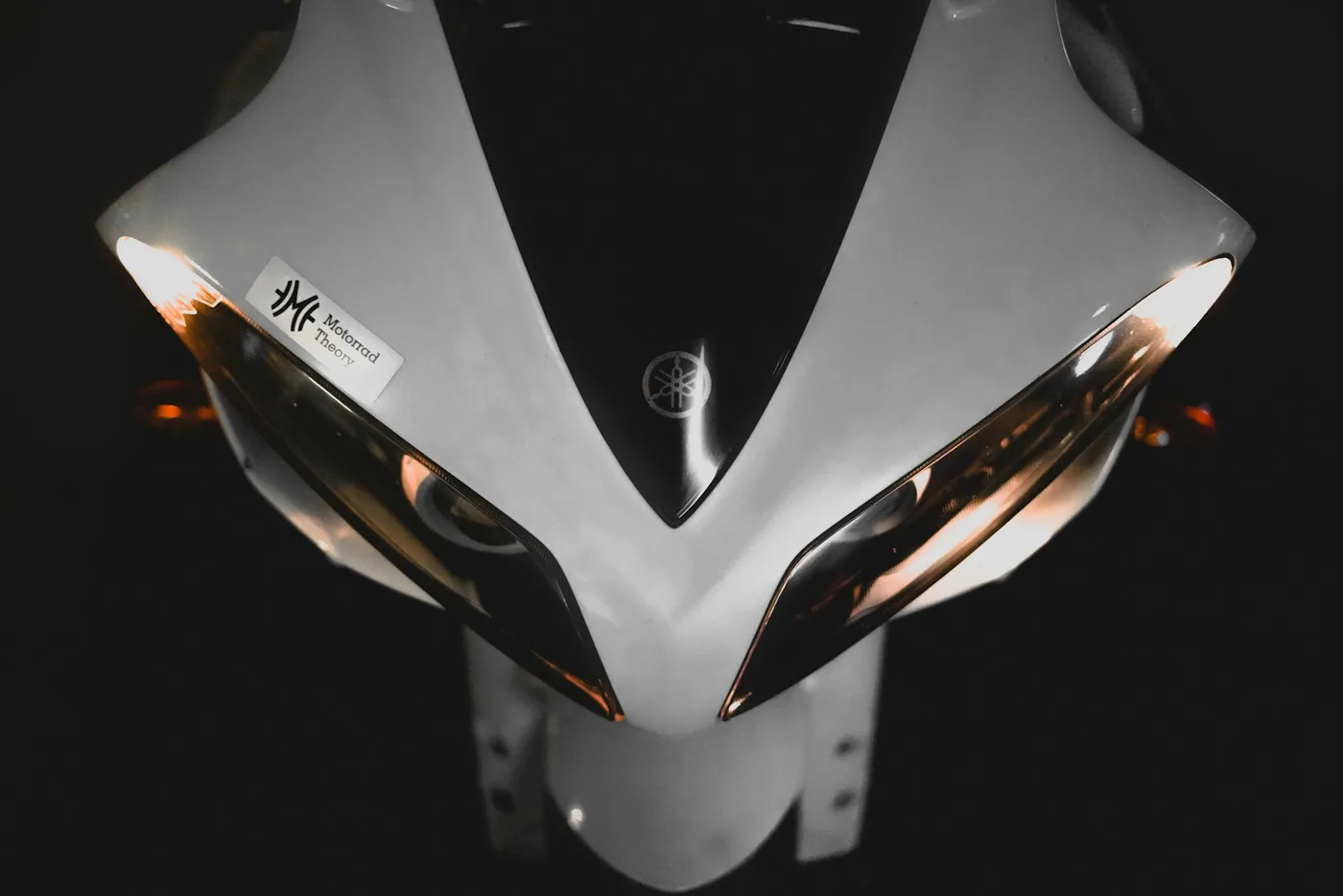
Motorcycle fairing parts leave this shop in gel coat rather than in colour, which makes them a different proposition from most of what a search for fairings will show you. The painting is yours to do, and it is better to know that before you order.
Motorcycle fairing parts arrive unpainted
The bodywork we handle is moulded in fibreglass and gel coated in white or black. Our own listing has said the same thing for years: the panels require the final painting by the customer. A moulding like that is finished as a structure and unfinished as a surface.
That is simply what a glass-reinforced plastic panel is when it leaves the tool. The gel coat is the resin skin the mould gives it: it protects the laminate and gives a painter something even to work on. It is not a topcoat and was never meant to be one.
Bodywork sits with the other groups on our motorcycle parts page, and it behaves differently from all of them. An exhaust or a piston either fits or it does not. A panel has a second stage after it fits, and that stage is yours.
There is a quiet advantage in this. Because everything ships in gel coat, there is no colour to pick and no factory paint code to get wrong. Colour is the largest single cause of a wrong bodywork order, and here it does not exist.
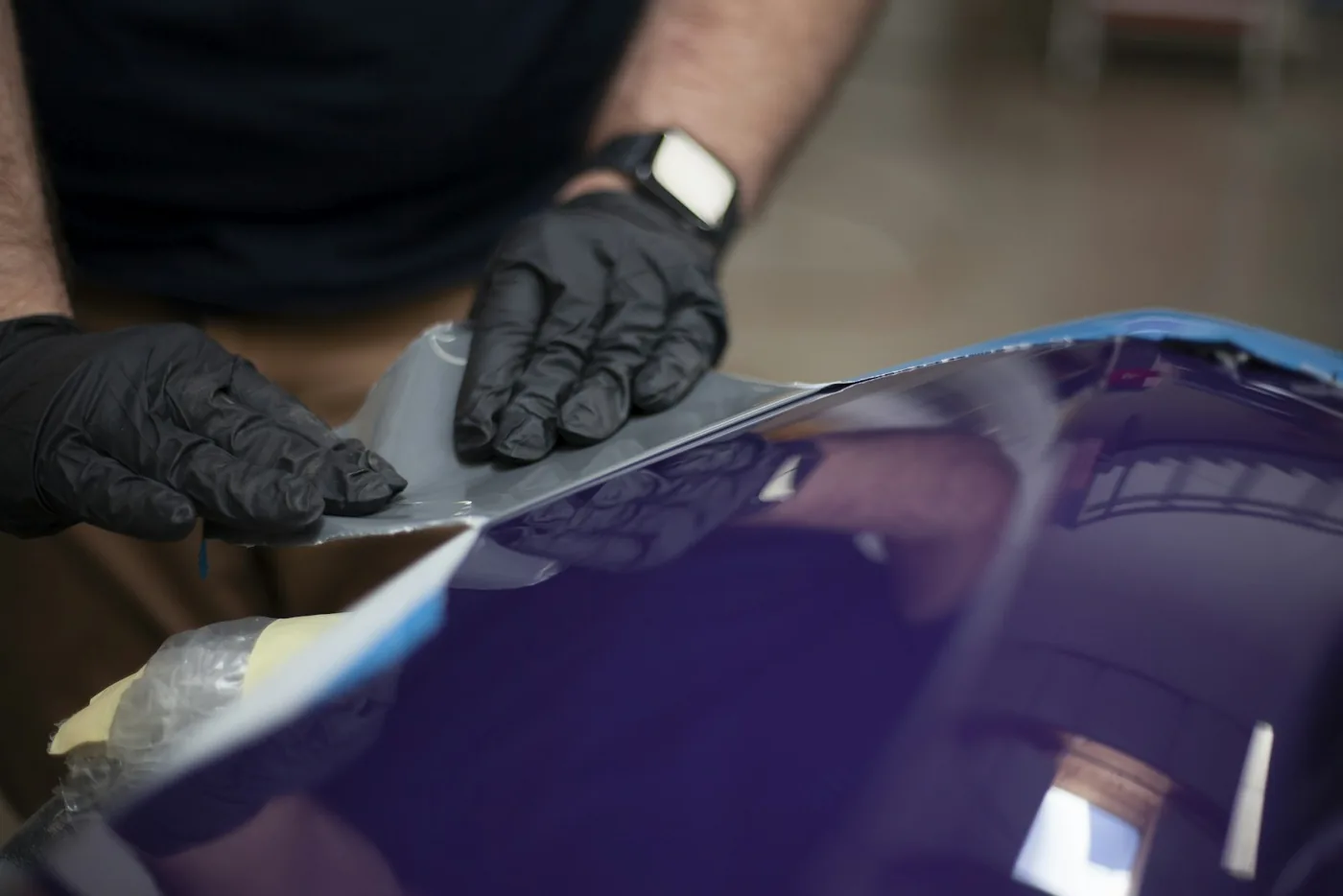
What arrives, and what you still have to do
Every fairing site answers the question “which bike is it for”. Almost none answers the one that decides whether you are happy with the parcel: what state will it be in when it arrives, and what work is still mine.
| Kind of bodywork | What it is made of | How it arrives | What you still have to do | Who it suits |
|---|---|---|---|---|
| Street fairing panels and kits | Fibreglass, gel coated white or black | Unpainted, moulded to shape | Prepare and paint it, and expect to make some fitting adjustment | A road machine being repaired or rebuilt |
| Race bodywork | Fibreglass, gel coated | Unpainted, and made for competition use | Paint it, remove the standard lighting and mirrors where the part assumes it, and be aware that at least one race tail section needs the rear subframe cut and modified | A track or race machine |
| Carbon panels | Carbon fibre | Finished in the weave | Nothing cosmetically, though it still has to be fitted | Weight and appearance, on the few panels offered that way |
| Genuine factory panels | The manufacturer’s own plastic | In a factory colour, where one is still supplied | Nothing, if that colour is still made | A standard road machine being kept standard |
| Screens and windshield covers | Formed sheet, black or clear | As offered | Nothing beyond fitting | Anyone replacing a screen on its own |
Read the fourth column before the first. It decides how much of the job you have actually bought.
Street bodywork and race bodywork are not the same product
This distinction catches people out more than any other. Some race bodywork was made to be fitted with the standard lighting and mirrors taken off, so the mountings a road rider expects are not in the moulding. At least one race tail section needs the rear subframe cut and modified before it will go on. That is a permanent alteration to the frame.
None of that is a fault; it is what competition bodywork is for. It does mean you have to tell us which side of the line you are on before we quote, because the same machine has parts on both sides of it.
You can order a single panel
The replica-kit trade sells sets, because a set is easier to price and to photograph. Most damage is not a set. One side cowl goes down the road, or a belly pan cracks on a kerb, and everything else is fine.
Our range has always been listed panel by panel as well as in kits: front cowls, side cowls, belly pans, seat cowls and covers, front fenders in fibreglass and in carbon, tank covers, rear huggers, screens and windshield covers in black and clear, and race under-trays. If you need one piece, ask for one piece.
Which panels have been made for which machine varies, and the model pages carry that detail rather than this one. Start with Honda CBR150R parts or Honda CBR250R parts, or with Honda Zoomer parts for the fibreglass body range built around the small commuters.
Fibreglass, ABS or carbon
These are not a quality ladder. They are three different trades between weight, repairability, finish and how much work you are prepared to do yourself.
Fibreglass is laid up rather than injected, which is why small-volume and race panels exist in it at all. It is stiff, it cracks rather than deforms, and a crack can be laminated back. Scott Bader, which manufactures composite resins and gel coats rather than motorcycle parts, publishes a knowledge hub covering gelcoats, their common faults and their repair.
Injection-moulded ABS is the material of the mass-market replica kit. It comes to shape and comes painted, which suits a popular large-capacity machine with a long production run. Its weakness is the mounting tabs, which snap rather than tear.
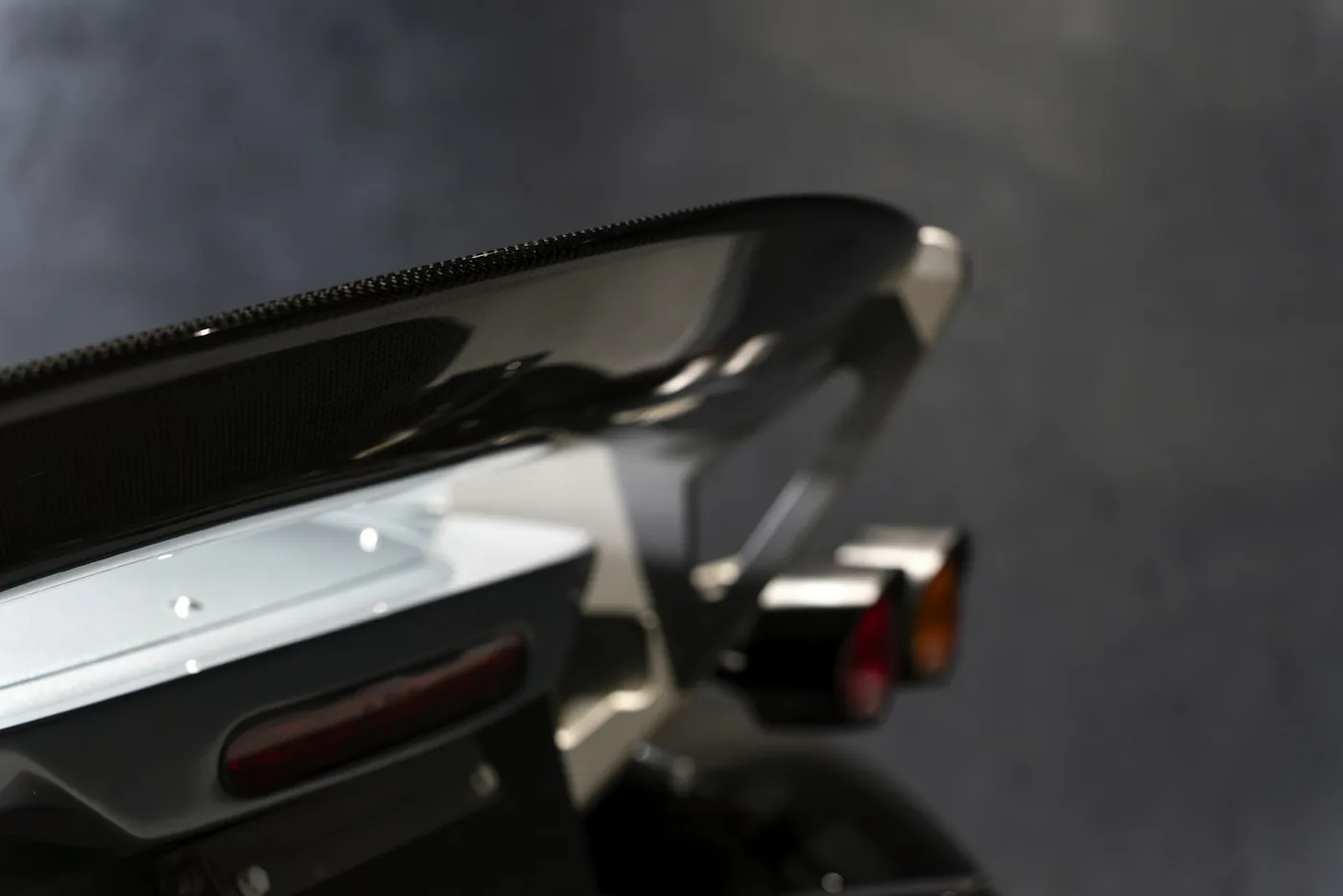
Carbon is light and expensive enough that it is normally used for one or two panels rather than a whole set. We have listed carbon front fenders and seat cowls beside the fibreglass versions of the same panel, so the choice is a real one.
Questions we are asked about bodywork
Do I have to paint it, or can I ride it in gel coat?
The gel coat is a working surface, not a finish. It chalks and stains in a way paint does not, and it will not match the panels you have kept. Assume painting is part of the job. We do not supply a paint specification, because the preparation and the paint system are your painter’s decision and not ours.
Will a replacement panel line up perfectly?
Expect to do some fitting. Bodywork is a moulded part on a machine that may have been dropped, and small adjustment at the mountings is normal on any panel not made by the factory that made the bike. We would rather say so plainly than promise perfect fitment.
What happens if the panel is wrong when it arrives?
We cannot take returns once goods have shipped, other than for a manufacturer’s fault, and nothing can be returned to Thailand at all. That is why this page spends so long on what arrives. Ask everything before the order rather than after it.
Why does a search for my machine’s bodywork return nothing?
The 150cc and 250cc Asian sport-bike class is barely represented in the Western bodywork trade, so a search for a Thai-market machine tends to return a blank. The panels exist. They are moulded in this part of the world and they are ordered from it.
What to send us for a bodywork quotation
Name the machine, give us its frame number, and say which panel you want. A photograph of the broken one is worth more than a description, because panel names vary between markets and a picture settles it. If you already have a part number, send that instead.
Say whether it is going on a road bike or a race bike, give the destination country and the quantity, and mention anything else you want in the same box. Bodywork is bulky, so shipping is quoted alongside it rather than assumed. Start with our bodywork quotation request and we will price it in Thai Baht by email.