
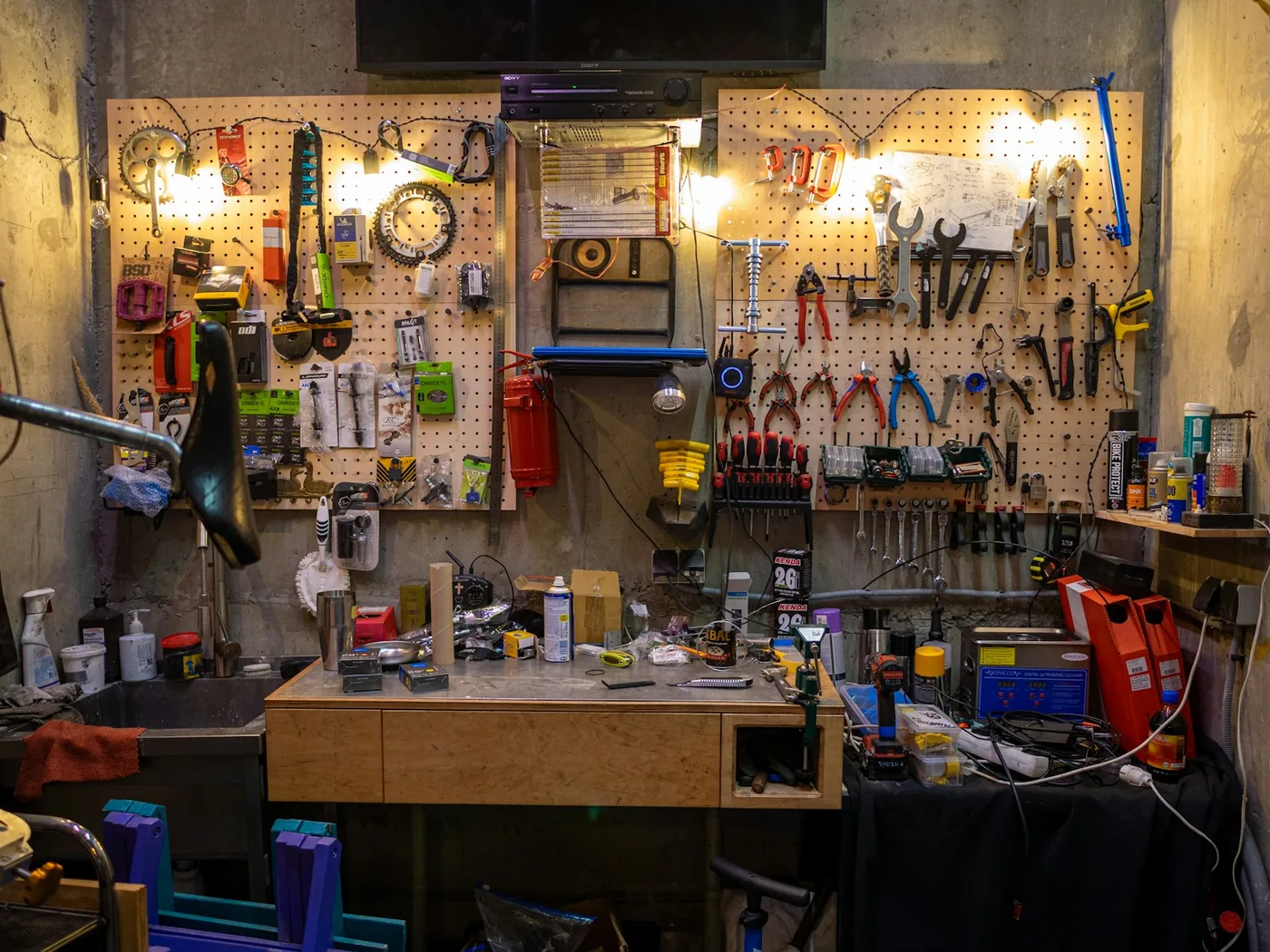
Motorcycle tuning parts are bought in an order, and most people start somewhere in the middle of it. This page is the signpost rather than the workshop: it says which decision comes first, what each one closes off behind it, and which of our other pages carries the detail.
Motorcycle tuning parts come in a sequence, and this is where yours starts
Plenty of sites list what you can buy. Almost none say in what order, which is why the question we are sent most often is not which part but what else. Buy a single item out of sequence and you often buy it twice, because the part before it changes what the right choice was.
That is the gap this page fills. It sits above the engine pages in our parts section and hands you to whichever owns your branch instead of repeating it. Two things it owns outright: what the engine breathes and how it fires, and the way this trade catalogues its parts.
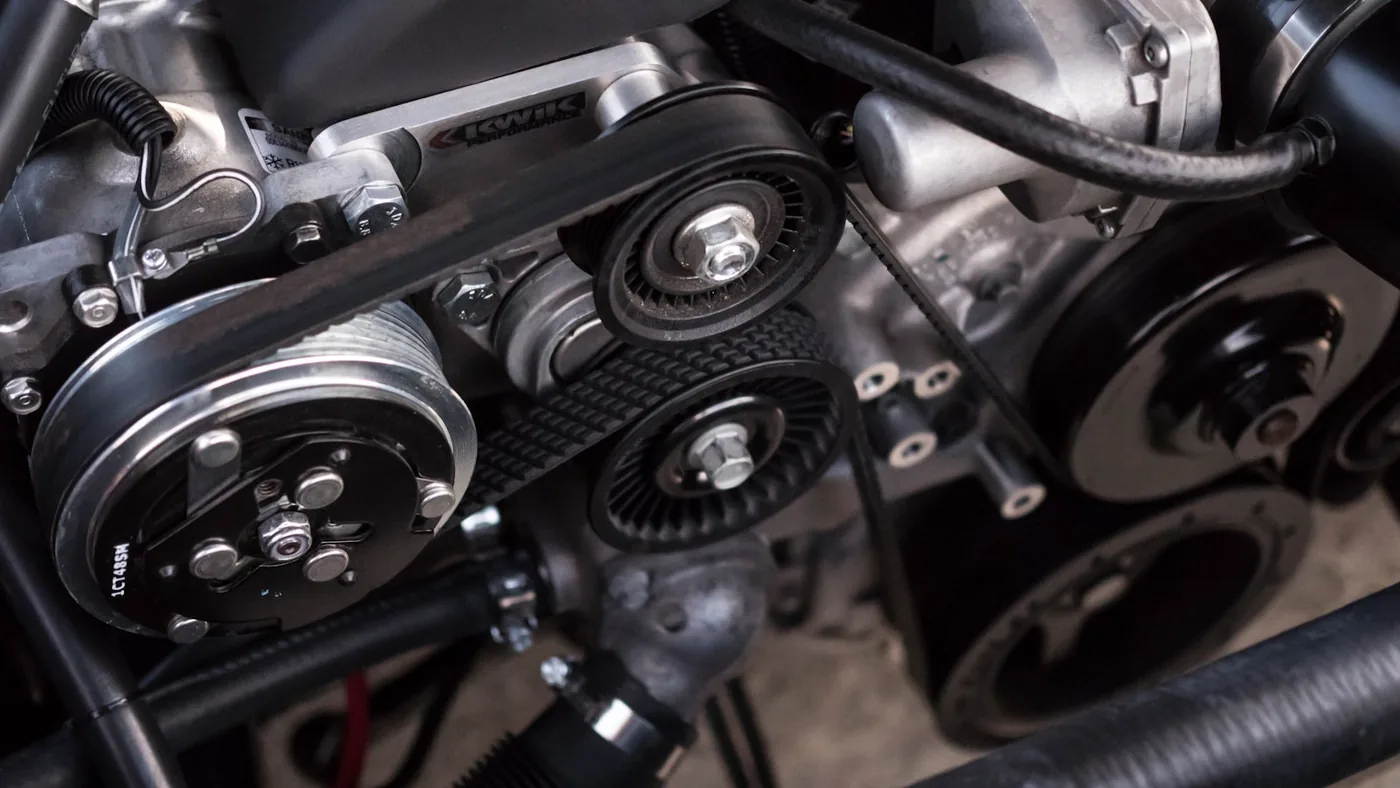
Find the row that matches what you actually want to change. The third column is worth reading twice, because it is what the decision commits you to whether you planned for it or not. Nothing here is a fitment claim and nothing here is a figure.
| What you want to change | Where that decision starts | What it commits you to next | Which page owns it | What we need to price it |
|---|---|---|---|---|
| More capacity | The barrel and piston | Carburation, usually the camshaft, sometimes the clutch | Piston kits | Engine number, capacity now, capacity wanted |
| More revs, or a different delivery at the same capacity | The camshaft | Valve springs, clearances, and jetting afterwards | Camshaft upgrades | Engine number, and what the machine is used for |
| How it breathes and how it fires | The carburettor and the ignition unit | Manifold, intake rubber, jetting, and the exhaust if it is still standard | This page | Engine number, what carburettor is fitted, a photograph of it |
| Getting the power to the road | The clutch first, gearing second | Springs and friction material, then sprockets or ratios | Clutch parts, then gearing | What is fitted now, and whether it slips or spins |
| Putting it back together oil-tight | The gasket set | Nothing further, if it is bought complete | Gasket sets | Engine number |
| What the machine becomes on paper | Displacement, and anything emissions-relevant | Your own country’s rules, settled before you order | Your national authority, not us | Destination country, so the freight is right |
| Forks, shocks, rearsets, wheels | Not this page at all | Nothing on this table | Suspension, brakes and wheels | Ask on those pages instead |
What the engine breathes and how it fires
This is the branch with no page of its own, and it is thick in our archive. Keihin PE24 and PE28 carburettors recur across the Monkey and Dax listings, the Wave110 and Wave125 listings, the Sonic and the CBR150R. Manifolds appear in two sizes as items in their own right, an intake rubber is listed separately, and racing CDI units appear from three named makers on the Thai-market models.
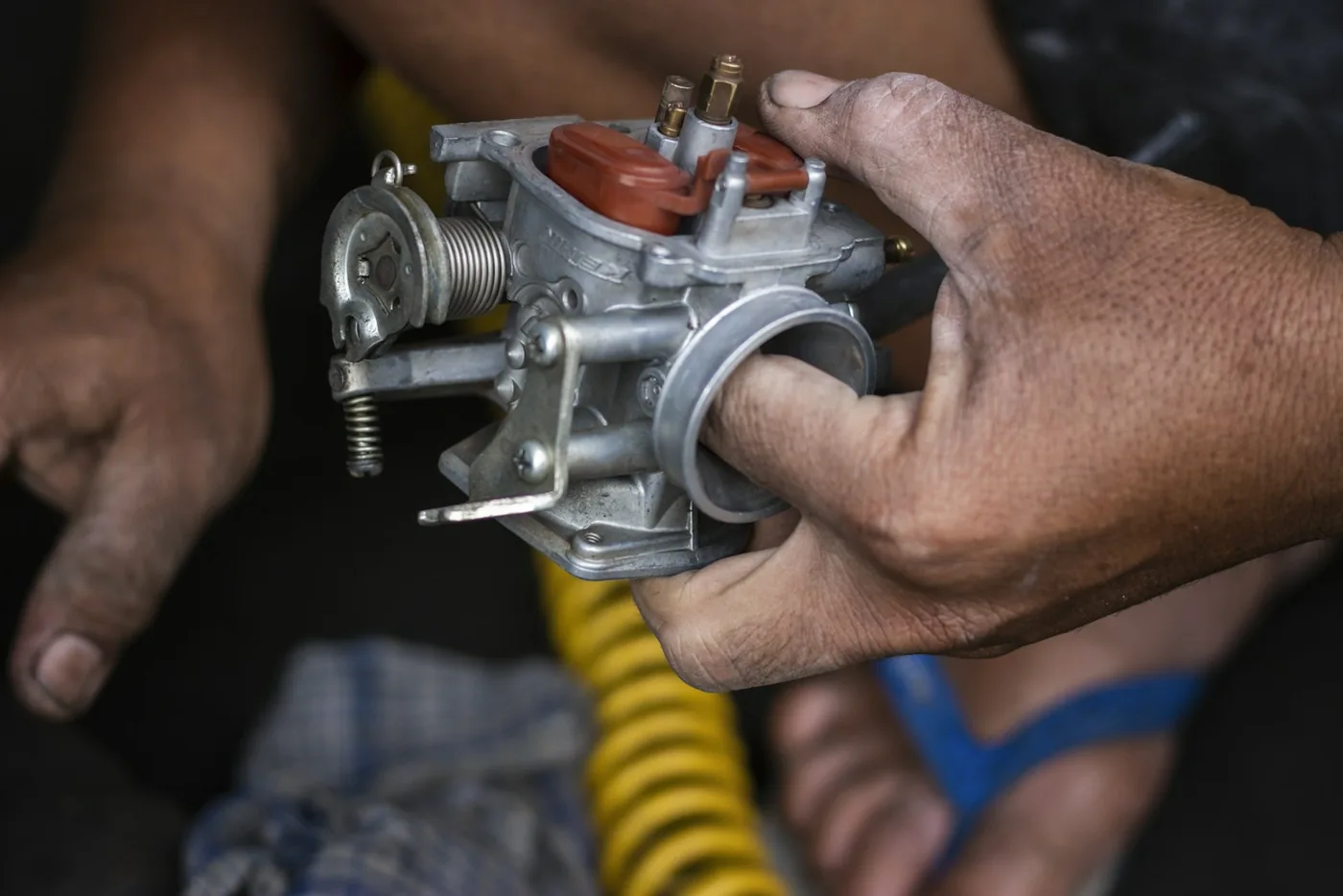
The practical shape of it is this. A larger carburettor is not a bolt-on, because the manifold and the intake rubber have to suit it at one end and the head at the other, and the jetting has to suit whatever the engine has become. The ignition unit is the other half of the conversation, since changing when the mixture is lit alters what jetting the engine wants.
We name those items as products our listings have carried, not as recommendations for your machine. Nothing here tells you what size to buy, and we will not guess from an email. Send a photograph of what is fitted.
Parts here are catalogued by size, not by model name
Our own historical listings organised the racing camshafts for one machine three ways: one for the standard capacity, one for a particular bore-up kit, and one for a larger kit again. The cam was chosen by what the engine had been made into, not by the badge on the tank.
That is a better mental model than any catalogue tree, and it is why we keep asking for the engine number and for what is already fitted. It also explains why a list copied from somebody else’s build disappoints: their engine was a different size from yours before the first part went on.
What this page does not cover
Signposting, not disclaimer. Each of these has a page that argues its case properly, and repeating them here would only make both worse.
- Valve timing, lift, springs and the chain that drives them belong with camshaft upgrades, which also handles staged kits sold as complete systems.
- Bore, oversize and what comes inside a bore-up kit belong with piston kits.
- The clutch is where a tune fails first, and it is covered on clutch parts.
- Sealing the engine back up is gasket sets; the pipe is exhaust parts.
- Gearbox internals sit with transmission parts, and overall gearing with sprocket kits.
- Chassis work bought under the same heading is elsewhere again: suspension, brakes and wheels.
- Which number identifies your engine is answered on engine parts, and the Japanese brand directory sits on parts from Japan.
What a modified machine becomes on paper
Capacity is a legal class in most countries, and a modified vehicle is something a national system tends to have a view about. Japan runs NALTEC, a governmental agency whose work includes vehicle inspection and approval testing for new designs and compliance, which is a plain illustration that the paperwork side of a modification is real somewhere.
We are not qualified to say what your own country requires and we do not handle approvals. Duties, taxes and local rules on arrival are settled by the buyer. We source, quote and ship; the rest is worth checking before you order rather than after the parcel lands.
Questions we are asked before a build
Which part should I buy first?
Usually the one furthest up the table, because it decides the ones below it. If capacity is changing, the barrel and piston decision comes before the cam and long before the jetting, since both of those depend on what the engine has become.
Do you tune engines or set bikes up?
No. We are a parts business: we source in Thailand and Japan, quote by email in Thai Baht, and ship. We have made a small number of parts under our own name for the Monkey and Dax, and beyond that the building is done by you or your workshop.
Can I just send a list from a forum thread?
You can, and it is a fair starting point, but include the engine number and what is already fitted. Lists written for another engine are common, and checking one is quicker than unpicking it afterwards.
Before we can price a tuning enquiry
Send the engine number and the frame number, then a part number where you have one or the part name where you do not, with the destination country and how many of each. Tell us what is fitted now and what the machine is for, since those two answers change most of the others.
A photograph of the carburettor and one of the head are worth several paragraphs of description. Start it on the engine performance quotation form, and if you would rather talk it through in stages, how to order sets out the way we work.