
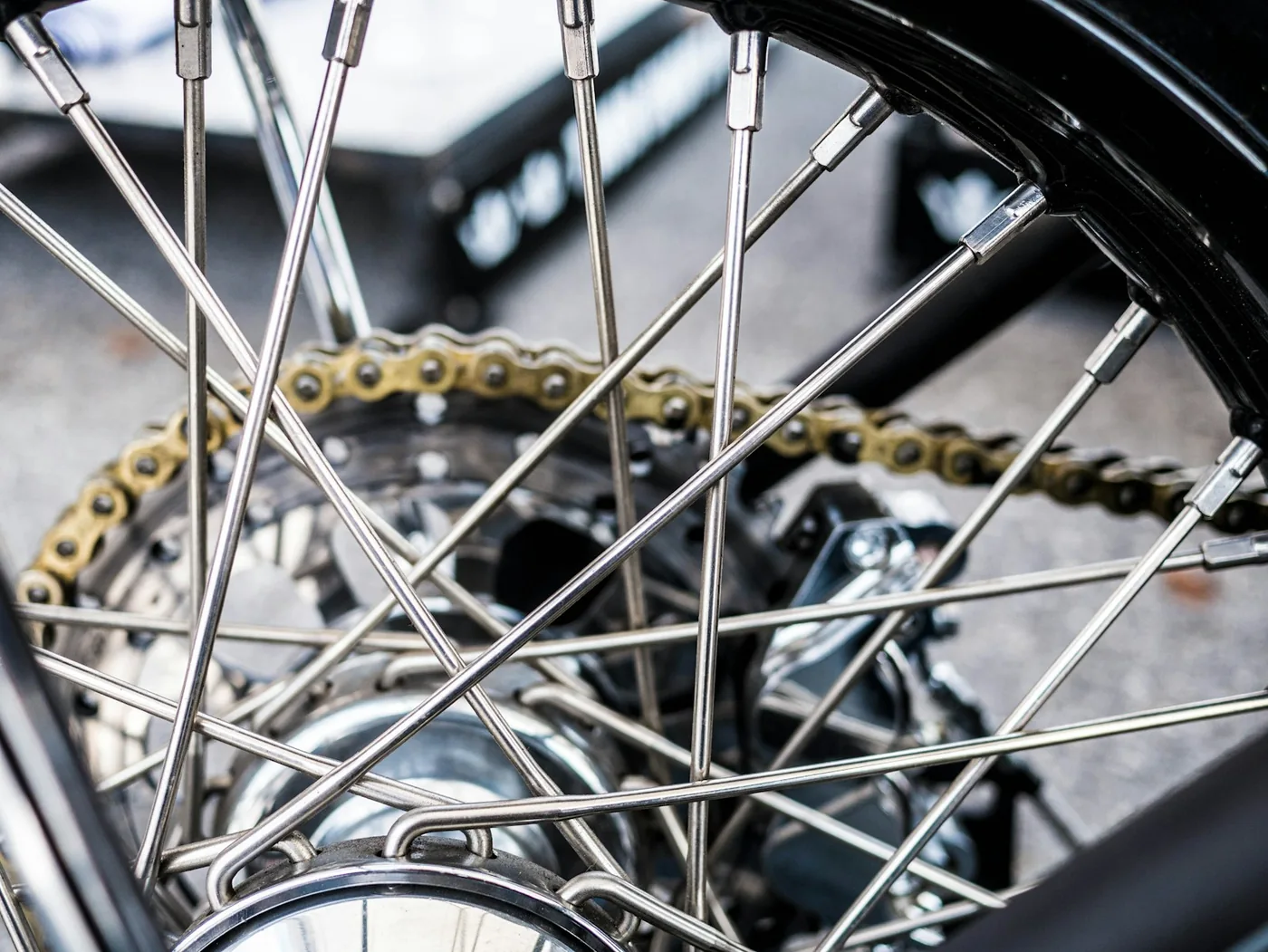
A wheel is an assembly rather than an item, and most motorcycle wheel parts enquiries stall over the smallest and cheapest thing in it. Getting the whole set right before anything leaves Bangkok is the actual work.
A wheel is not one part
Somebody writes asking for a bearing. A bearing is one member of a group that only works together: miss one and the wheel either will not go in, or destroys itself once the axle is tightened.
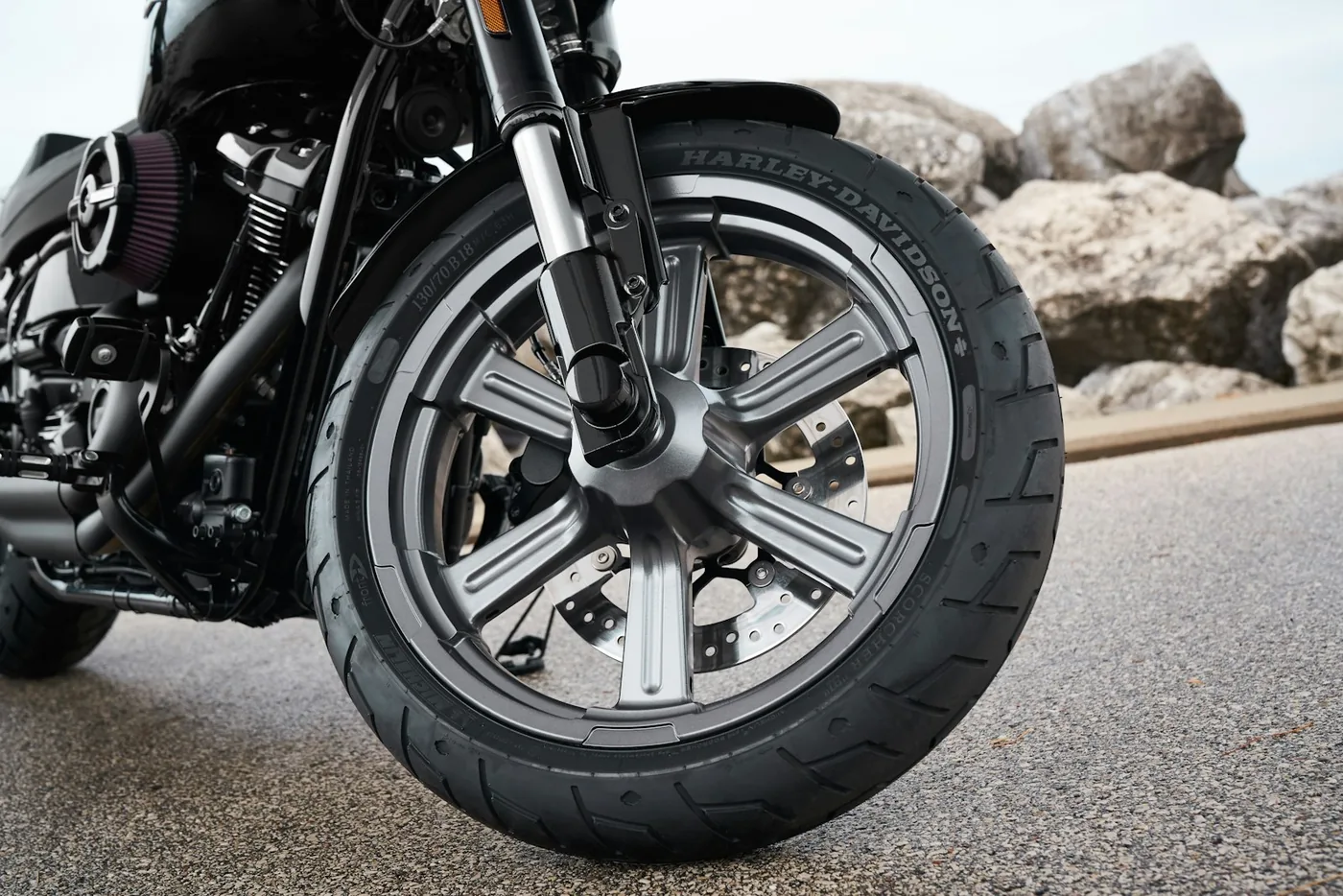
A wheel here is some combination of the following. Elsewhere in our parts catalogue these items are filed under braking, drivetrain or suspension, because that is where they end up once fitted. At the moment of ordering they are one job.
- The hub, and on a wire wheel the rim, spokes and nipples
- Two bearings, and the inner spacer between their inner races
- Dust seals, and the outer collars locating the wheel between fork legs or swingarm
- The axle and its nut
- At the rear, cush drive rubbers and the sprocket carrier where one exists
- Rim tape, tube and valve, unless the wheel is a tubeless design
- The drum brake hub shell, on the many machines here that stop on a drum
- The speedometer drive, a geared unit living against the hub on a cable machine
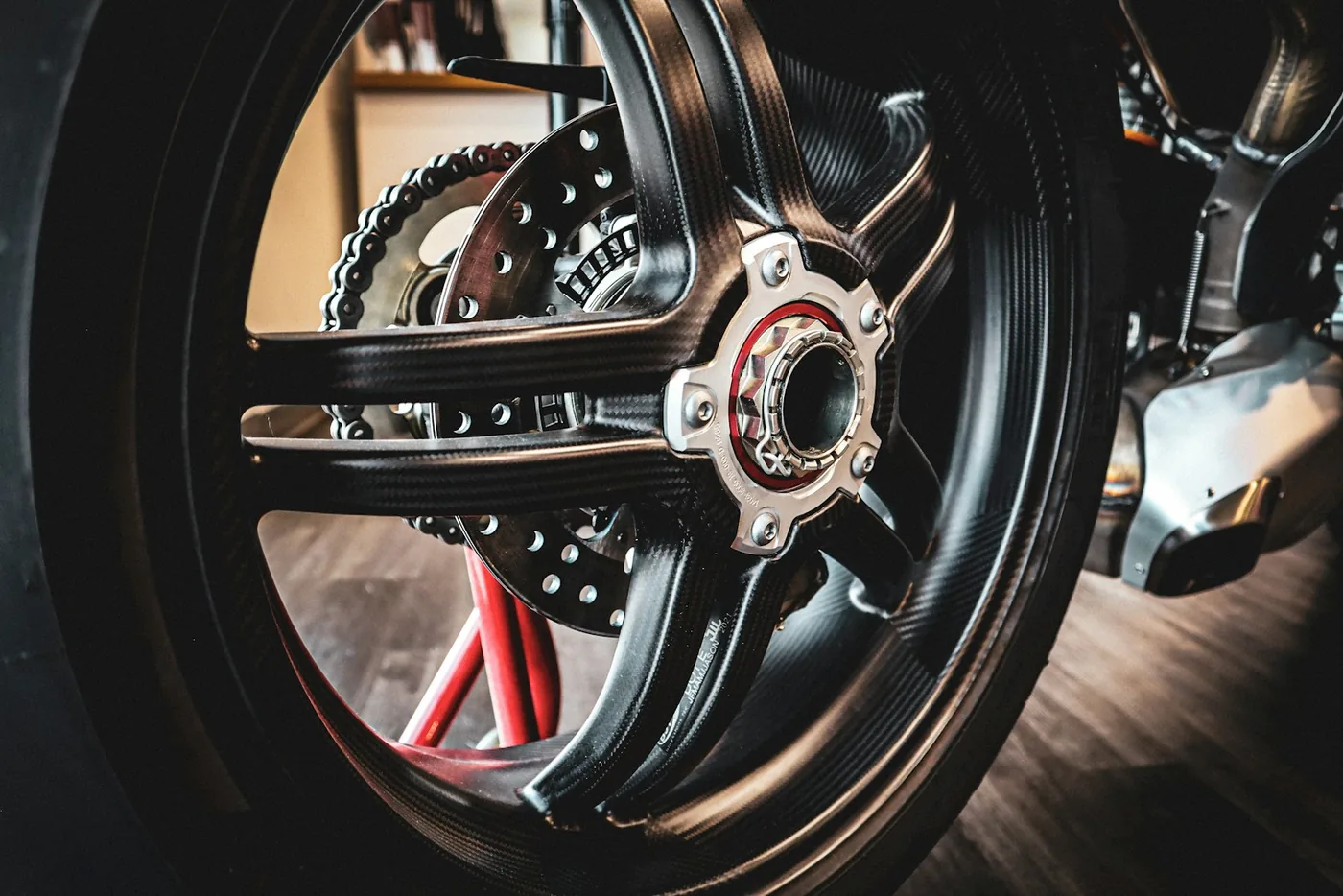
Which motorcycle wheel parts you are actually replacing
What we need depends on how large the job is, and people are usually on a bigger job than they think. The table below is how an enquiry gets read here. It sorts by scope and carries no dimension.
| What you think you are buying | What has to be right | What it disturbs | Where it sits here | What we need to price it |
|---|---|---|---|---|
| Wheel bearings | The bearings and the inner spacer | Dust seals, often the collars | This page | Frame number, photograph of what came out |
| A spacer or a collar | Which of several, and which side | Nothing if right; the bearings if not | This page | Frame number, photograph of the loaded axle |
| A rim | Spokes, nipples, and a wheelbuilder | The tyre, and whether it runs true | This page | Frame number; rebuilding or replacing |
| A complete wheel | Hub, bearings, spacers, axle fit, speedometer drive | Brake hardware and the instrument | Here, with braking | Frame number, wheel size now and wanted |
| A change of wheel size | All the above, plus fork and brake mounting | Fork, brake, mudguard, speedometer, gearing feel | Here, braking and suspension | Frame number, photographs of the whole end |
| A speedometer that still reads true | Cable drive or sensor | A different purchase entirely | This page | Photograph of the instrument and the hub |
The right-hand column barely changes, and that is the argument.
The inner spacer is the part that kills bearings
Recurring discussions in the small-bike forums are about spacers rather than wheels, and the failure is always the same. The tube between the bearings is what the axle clamps against. Without it, or with the wrong one, tightening the axle nut draws the inner races towards the middle of the hub and loads the bearings sideways — not a load they are built for.
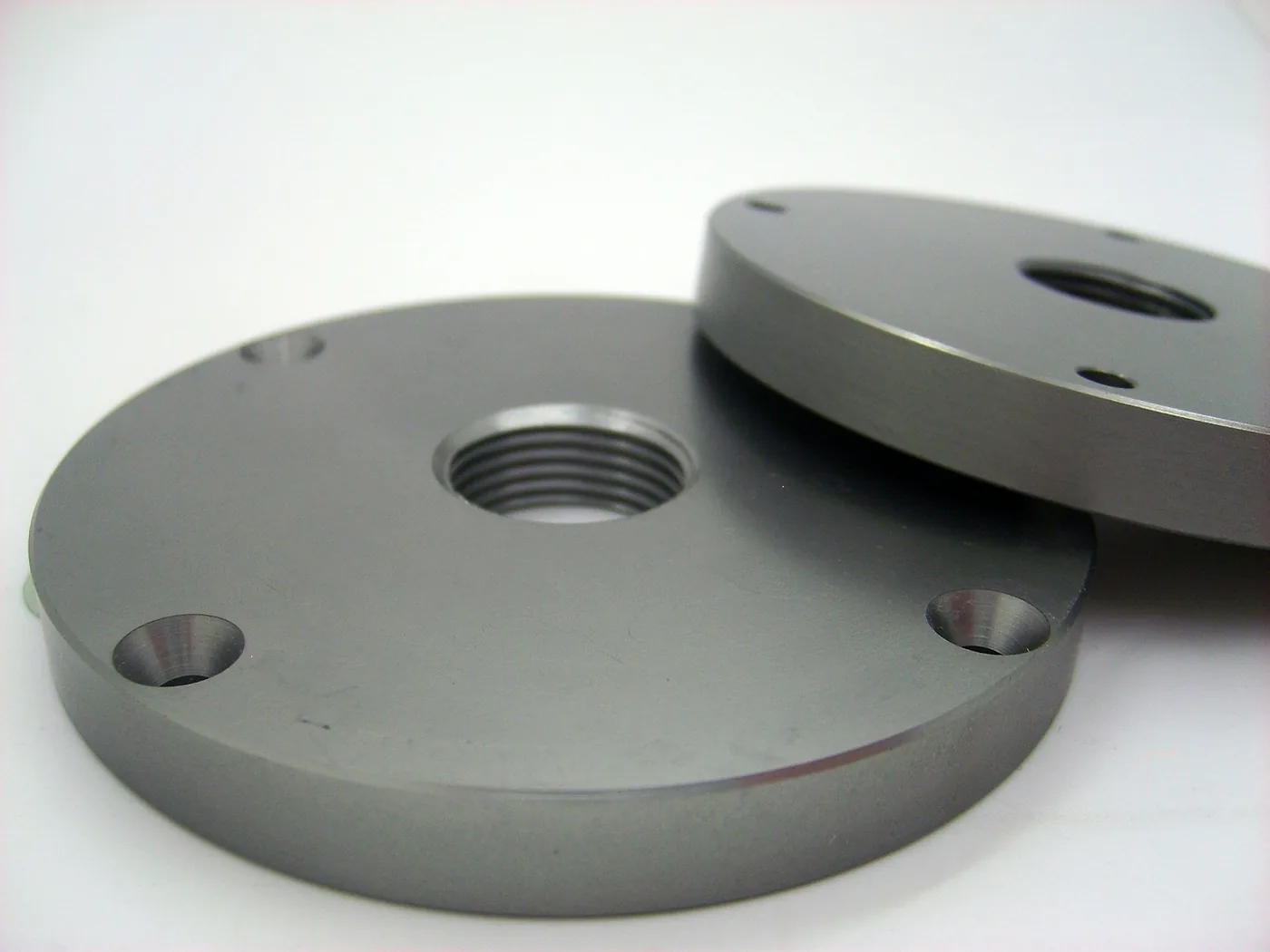
Outer collars behave the same way. There are often several on one axle, they are not interchangeable side to side, and they look identical once tipped into a tray. So we ask for the axle to be photographed with every piece still threaded on it. Our note on identifying parts from photographs covers taking that picture usefully.
Getting old bearings out is a job in itself, and enquiries that begin as bearings often end as a hub.
Change the wheel and the speedometer stops telling the truth
This is the piece nobody selling wheels mentions. On a cable-driven machine the speedometer is turned by a geared drive engaging the hub, matched to how far the wheel travels in one revolution. Change the wheel or the tyre and the instrument reports a distance the machine is no longer covering.
Our archive shows how specific this gets. An old front-end listing for the Zoomer included a standard speedometer gear and offered a second one as an option, described by the tyre size it suited. The principle matters more than the number: a speedometer gear is chosen against the tyre, not the badge.
Newer machines do the same job with a sensor, and the correction is then a device rather than a gear. We do not supply those. We can say which of the two arrangements your enquiry involves, once we see the instrument and the hub.
Kits, rims, and why there is no size chart here
Wheels in this trade have always sold as kits, and our historical listings are the evidence. Front-end packages were written out as a bill of parts: wheels, a collar kit, a speedometer gear and a longer cable, alongside braking and fork hardware. The fork half belongs with suspension parts, the caliper half with brake parts. Read that page’s argument backwards and you have this one: change the wheel and the brake becomes a separate question.
Rims are a separate purchase from wheels, and the two get conflated. Our archive listed aluminium rims for the SR as front and rear pairings — a rebuild order, meaning a rim to lace onto a hub you own. A made-up wheel is a different transaction.
What we will not publish is a rim-width or tyre-size chart. The relationship between a rim and a tyre is a standard, not a shop’s opinion: in Japan it is maintained by JATMA, the Japan Automobile Tyre Manufacturers Association, whose stated work is developing standards, safety research and tyre maintenance awareness, and which publishes an annual Year Book alongside tyre selection, use and maintenance standards. The site is principally in Japanese. We would rather read that against your machine than print a table which invites the wrong order.
Questions we are asked before a wheel order
Can I just order the bearings on their own?
You can, and sometimes that is all that is needed. Send the frame number and the photograph anyway, because a worn, bent or missing inner spacer will kill the new bearings as it killed the old.
Will a wheel from another small Honda fit mine?
Not something we will answer from two model names, for the reason set out on our 4Mini parts page. Builders here do move wheels between machines, but with an axle, collars and often a brake bracket in hand. Send photographs and measurements and we will say what we can source.
My KSR110 already has a different front end. Where do I start?
With measurement rather than the model name. Once a KSR110 has been altered, the badge stops describing what is bolted to it, and photographs of the axle, collars and fork bottoms beat any specification.
What to send us for a wheel quotation
The frame number comes first; it is the only thing that fixes which machine we are reading. Add a part number where you have one, or the part name if not, with the destination country and the quantity. Say what wheel size is on the bike now, what you want it to be, and whether the speedometer runs from a cable or a sensor.
Photographs earn their place here more than on most categories: the axle with every collar on it, the hub from both sides, the instrument face. Start a wheel and chassis quotation, or the braking quotation form if a brake change is driving the job. We check the supply source in Thailand or Japan and reply by email with a price in Thai Baht.