
Honda Sonic 125 parts are hard to find outside Thailand, and that is the only reason most people reach us. The Sonic is a Thai-market machine derived from the Nova Sonic RS — a water-cooled underbone with a manual clutch — and it is rarely listed anywhere its owners can order from.
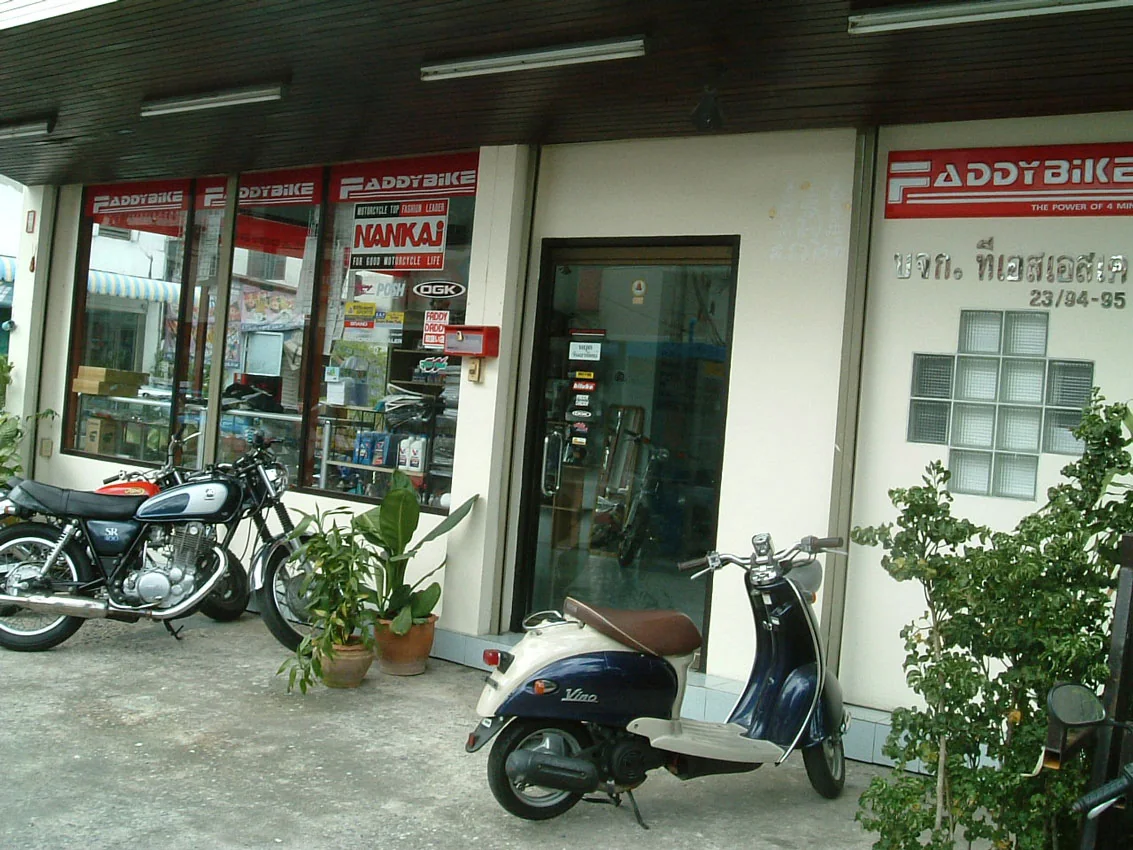
A sports underbone with a manual gearbox
The Sonic is not a Wave with different bodywork. It came from the Nova Sonic RS line, it is water-cooled where the ordinary underbones are air-cooled, and it has a hand clutch rather than the automatic centrifugal clutch that most machines of this size use in Thailand. Electric-start and kick-start versions were both sold.
That combination is why the bike has the following it has, and why the parts that suit it are a race-oriented set rather than a commuter set. It is also why parts from a Wave will not simply drop on, and why we ask which machine you have before quoting anything.
The model page we published for it at the time recorded a water-cooled OHC single of 124.7 cc, bore and stroke of 58 by 47.2 mm, and a compression ratio of eleven to one. The front end is telescopic, the rear is a monoshock, and braking is by disc at the front and drum at the rear. Tyres were 60/100-17 at the front and 80/90-17 at the back, with a 4.2 litre tank and a dry weight a little over 100 kg. The electric-start and kick-start versions carried different batteries.
Those numbers are worth having in front of you when you write, because several of them decide a part. Tyre and rim sizes settle which rubber and which sprocket pitch make sense; a monoshock rear settles which shock absorber can be quoted; and the water cooling means the Sonic has a set of components no air-cooled underbone has at all.
Honda Sonic 125 parts we have supplied
The range we built for this bike came from the Thai tuning makers and from the Japanese carburettor and component suppliers we deal with directly.
- Exhausts. Racing systems from NMF, DBS and Endurance — three separate makers, listed side by side rather than as variants of one pipe.
- Engine. A big-bore kit taking the engine out to 143 cc, racing camshafts and stronger clutch springs, with a 28 mm Keihin PE flat-slide carburettor and the fuelling parts that go with it.
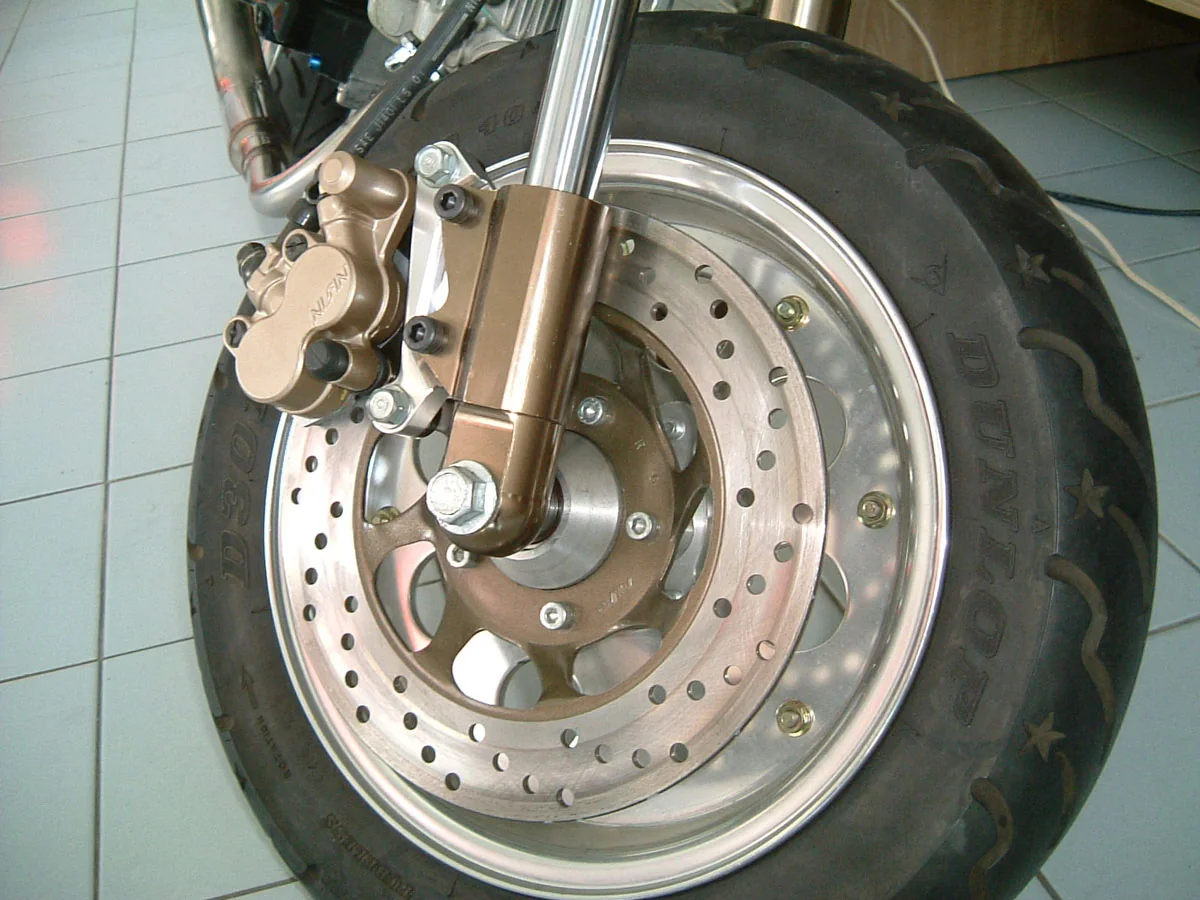
- Chassis. Replacement swingarms, rear shock absorbers and a racing tyre in the 80/90 rear size.
- Controls and cockpit. Aluminium rearsets and a six-position adjustable lever kit.
- Drivetrain. Drive and rear sprockets for gearing changes.
- Cosmetic. Chrome engine covers and the chrome trim parts that were popular on these machines in Thailand.
Read that list as the shape of the range rather than as a shelf count. Some of it is still ordered without difficulty and some of it has been out of production for years, and the only way to find out which is which is to ask about the specific part.
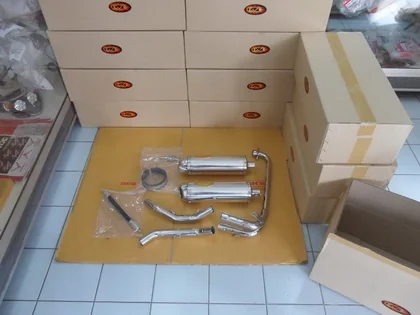
Ignition: the early and later bikes are different
Racing CDI units for the Sonic were always listed in two forms, one for the earlier machine and one for the later one, and we carried units from API Racing and NMF in that split. Fitting the wrong one is the single most common mistake on this model.
The split was not symmetrical, either. API Racing was listed for both the earlier and the later bike; the NMF unit was listed for the later one only. So the answer to “which racing CDI can I have” depends on the machine before it depends on the brand.
We cannot tell which you need from a model name alone. Send the frame number, and a photograph of the existing unit and its connector if the bike has already been worked on, and we will identify it before anything is packed.
Genuine Honda spares for the Sonic
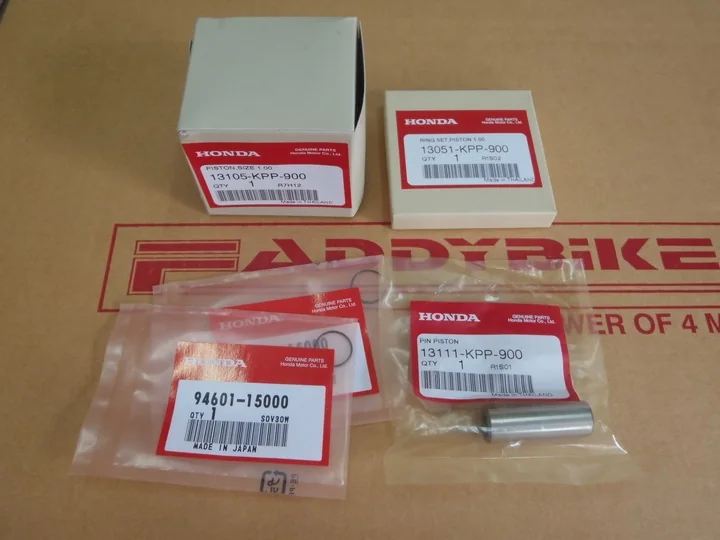
Tuning parts are only half of it. Genuine Honda components come through the factory parts system in Thailand or in Japan, and that is the route for everything a running bike needs: cooling-system parts, gaskets and seals, cables, switchgear, panels and fasteners.
Genuine ordering runs on part numbers, so send one if you have it and the part name with your frame number if you do not. Parts ordered from Japan are normally available in about four working days when the factory is not backordered. The brands and makers we source through are set out on the parts from Japan page.
Ordering a part for a bike nobody lists
Nothing here is sold from a live catalogue, and on a model this obscure that is an advantage rather than an inconvenience. Every enquiry is looked at by someone who can check the supply source in Thailand, ask a Thai supplier a question in Thai, and tell you honestly when a part is no longer made.
The sequence is always the same. You send the machine and the part; we identify it, check availability at the source and reply by email with a price in Thai Baht; you confirm; we take payment; the parts are packed at our own premises and dispatched. A CIF figure is the parts price with shipping added, so the number in the email is the one that gets the box to your address rather than to the freight agent.
Payment is by bank transfer, by credit card through a secure link, or by PayPal. The order policy covers the sequence in full, including the rule that once an order has shipped we cannot take it back except for a manufacturer’s fault — parts cannot be returned to Thailand at all. That is why identification comes first and packing second: on a machine this poorly documented abroad, the email exchange before the order is the part that protects you.
Shipping out of Bangkok
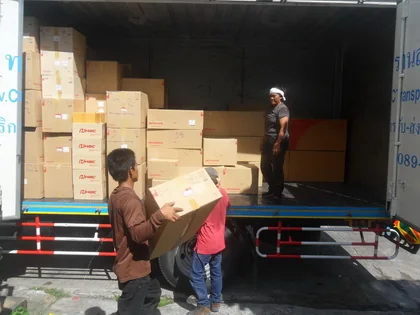
Orders are packed at our own premises. Postal EMS from Thailand or Japan runs about four to seven days; postal air parcel takes roughly two weeks where EMS does not reach. An exhaust system, a swingarm or a set of tyres is bulky enough to go by courier or air cargo instead, and the shipping cost is quoted with the parts so you see the landed figure first.
Weight and shape matter more than value here, because so much of what people order for a Sonic is long or awkward. If you are building a bike rather than fixing one, it is usually cheaper to gather the exhaust, the swingarm, the shock and the sprockets into one consignment than to order them job by job.
Import duty and tax are levied when the parcel arrives in your country and are yours to settle. Customs treatment of motorcycle parts varies a great deal, so ask your own customs office before committing to a large order.
Ask for a quotation
Send the part number, or the part name together with your frame number, and tell us the destination country and how many you need. Say whether the machine is an early or a later Sonic if you know, and add a photograph — on this bike a photograph settles more questions than a description does.
Request a quote for Sonic 125 parts, or open one with engine and performance, drivetrain or genuine parts already selected. The model index shows the other machines we cover, and you can contact the shop directly if you would rather write in your own words.