
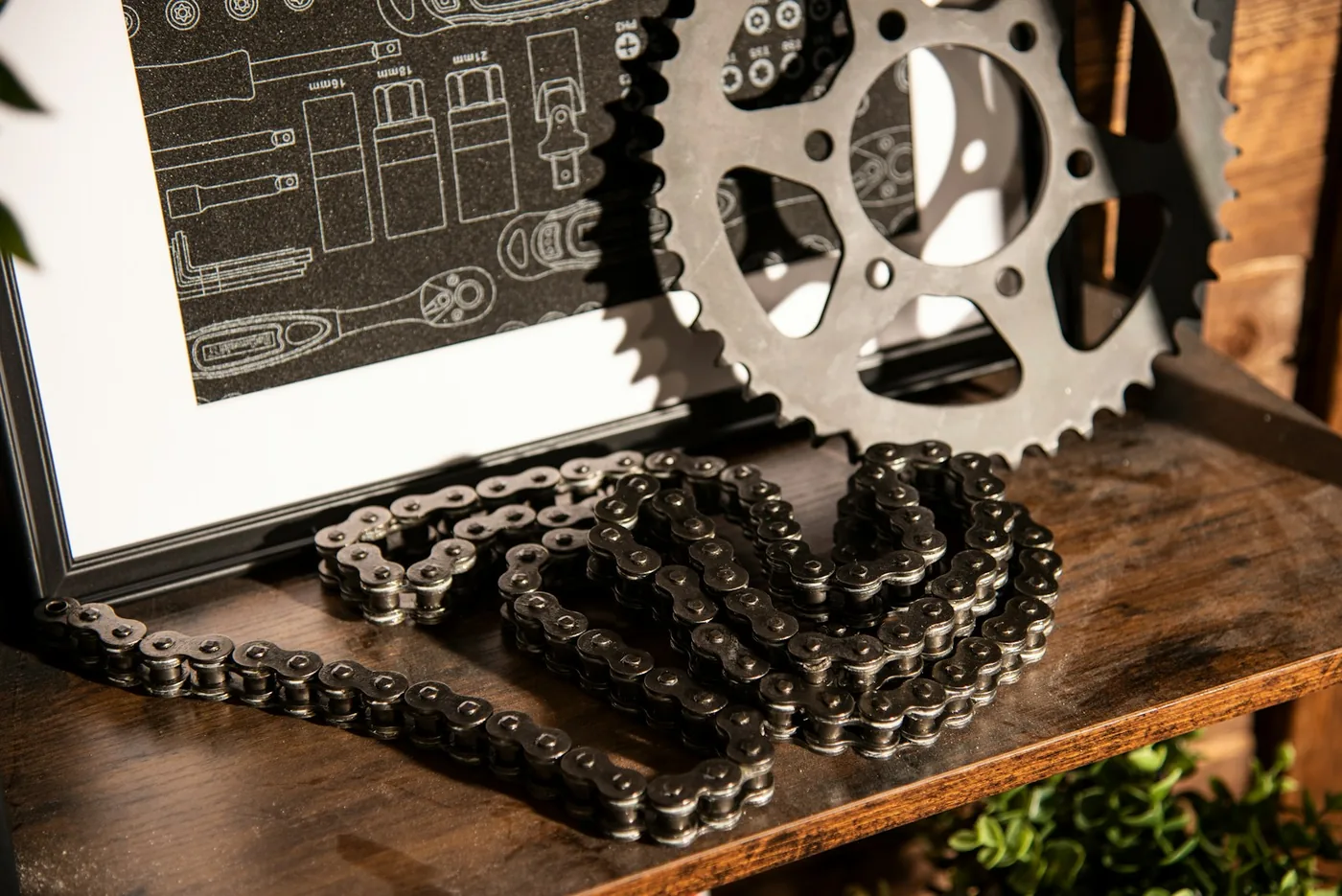
Motorcycle sprocket kits are sold almost everywhere as three matched pieces for a large sport machine. On the small Japanese and Thai machines we supply, the first question is not how many teeth but which pitch the chain is, and that changes what a kit even means.
Motorcycle sprocket kits begin with the pitch
Final drive is a chain running between two sprockets, and the chain has a pitch that both sprockets must share. Get the pitch wrong and nothing else you decided matters, because the teeth will not sit in the rollers.
Almost every kit retailer that ranks for this subject is built around the heavier sealed chains fitted to large-capacity machines. Our own listings have carried 415, 428 and 520 across the range we handle, which is a different world of parts, and the smaller pitches barely appear in the Western kit trade at all.
The honest starting point is what is on the machine now, not what a catalogue assumes. Drivetrain sits with the other groups on our motorcycle parts page, and it is one of the few where a photograph settles more than a model name.
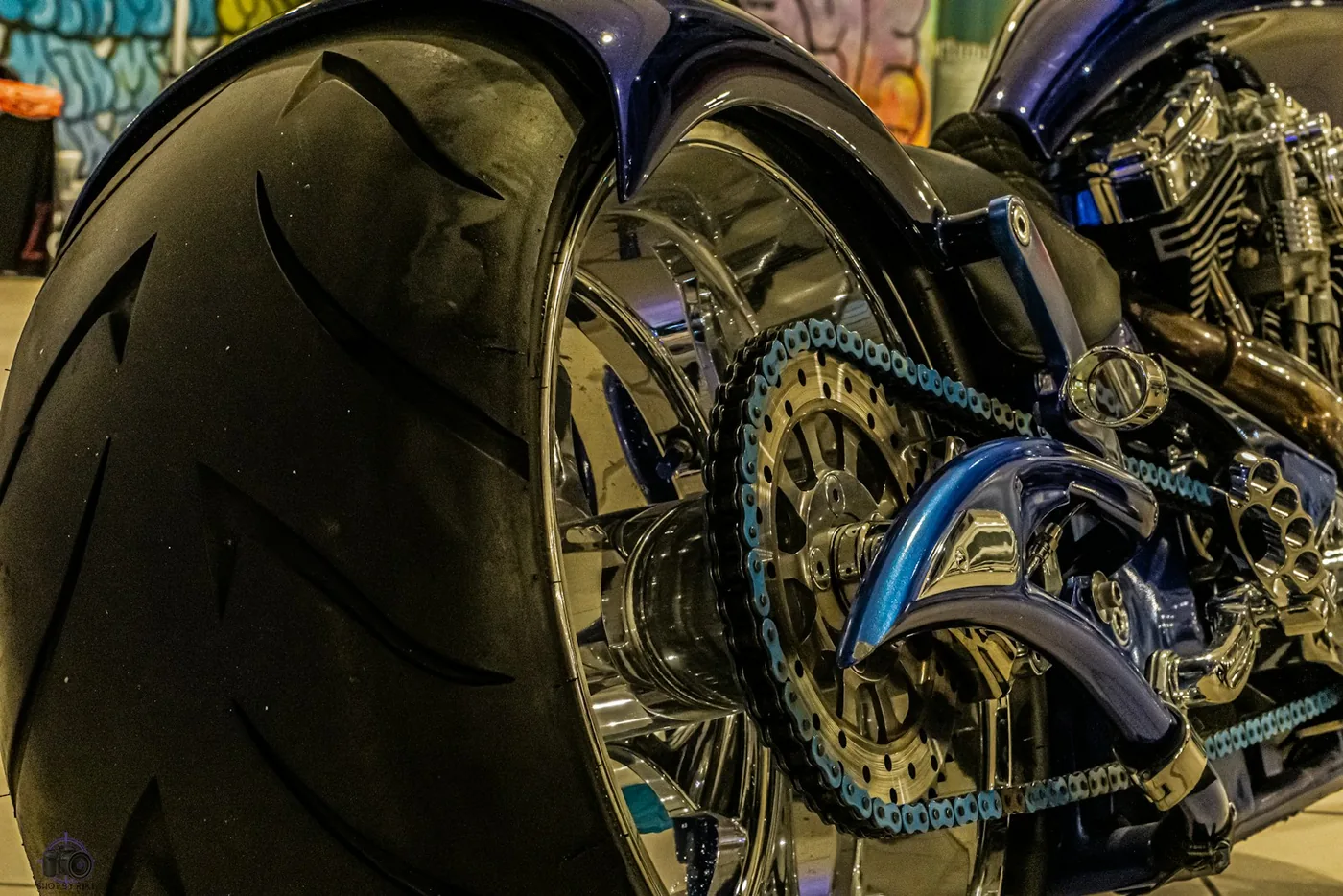
What are you actually trying to change
Six different intentions arrive as the same enquiry. Which one you hold decides whether you need one piece, three pieces, or a conversation about something else entirely.
| What you want to change | Which end it comes from | What it forces | What it costs you | What we need to quote it |
|---|---|---|---|---|
| Nothing; it is simply worn out | Both sprockets and the chain together | Replacing all three, because a tired chain ruins a fresh sprocket | Nothing, if you change the set | Frame number, and the pitch on it now |
| More acceleration | Usually the rear | A chain length check, and possibly a different chain | Cruising revs, and top speed | Frame number, and what the machine is used for |
| Lower cruising revs | Usually the front | The same chain length check | Response in traffic and on hills | Frame number, and what the machine is used for |
| A different pitch altogether | Both sprockets and the chain, always together | A complete set; a sprocket of one pitch will not run a chain of another | Being able to buy replacements locally in the old pitch | Frame number, and the pitch on it now |
| One piece only | Whichever piece failed | Nothing, if the rest is sound | Nothing | Frame number, and a photograph of the part |
| The ratios inside the gearbox | Neither end; this is not final drive | A different job altogether | See our transmission route | Frame number, and what the machine is for |
Front, rear, or both
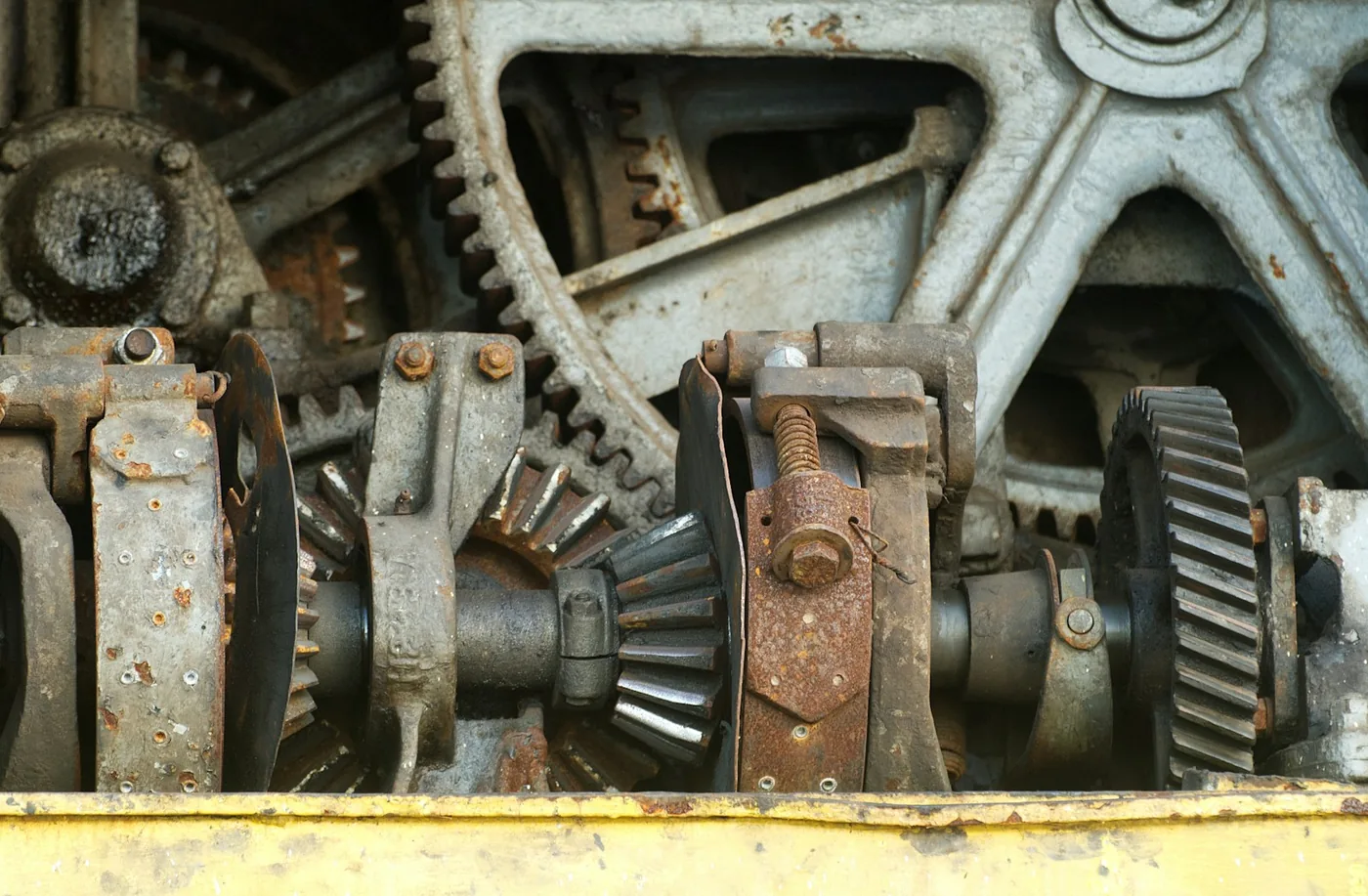
The two ends do the same job from opposite directions, and a single tooth at the front counts for a good deal more than a single tooth at the rear. That is why the front sprocket is where small adjustments are usually made and the rear is where larger ones are.
Fewer teeth at the front, or more at the rear, gears the machine down: it pulls harder and revs higher at a given road speed. More at the front, or fewer at the rear, does the reverse and quietens a long ride at the cost of response. We put no numbers on that; the right answer depends on load, terrain and use.
Changing the sprockets alters the ratio the gearbox is working through; changing the ratios inside the gearbox is a different job, and it belongs on our motorcycle transmission parts page rather than this one.
Why we have listed the pieces separately
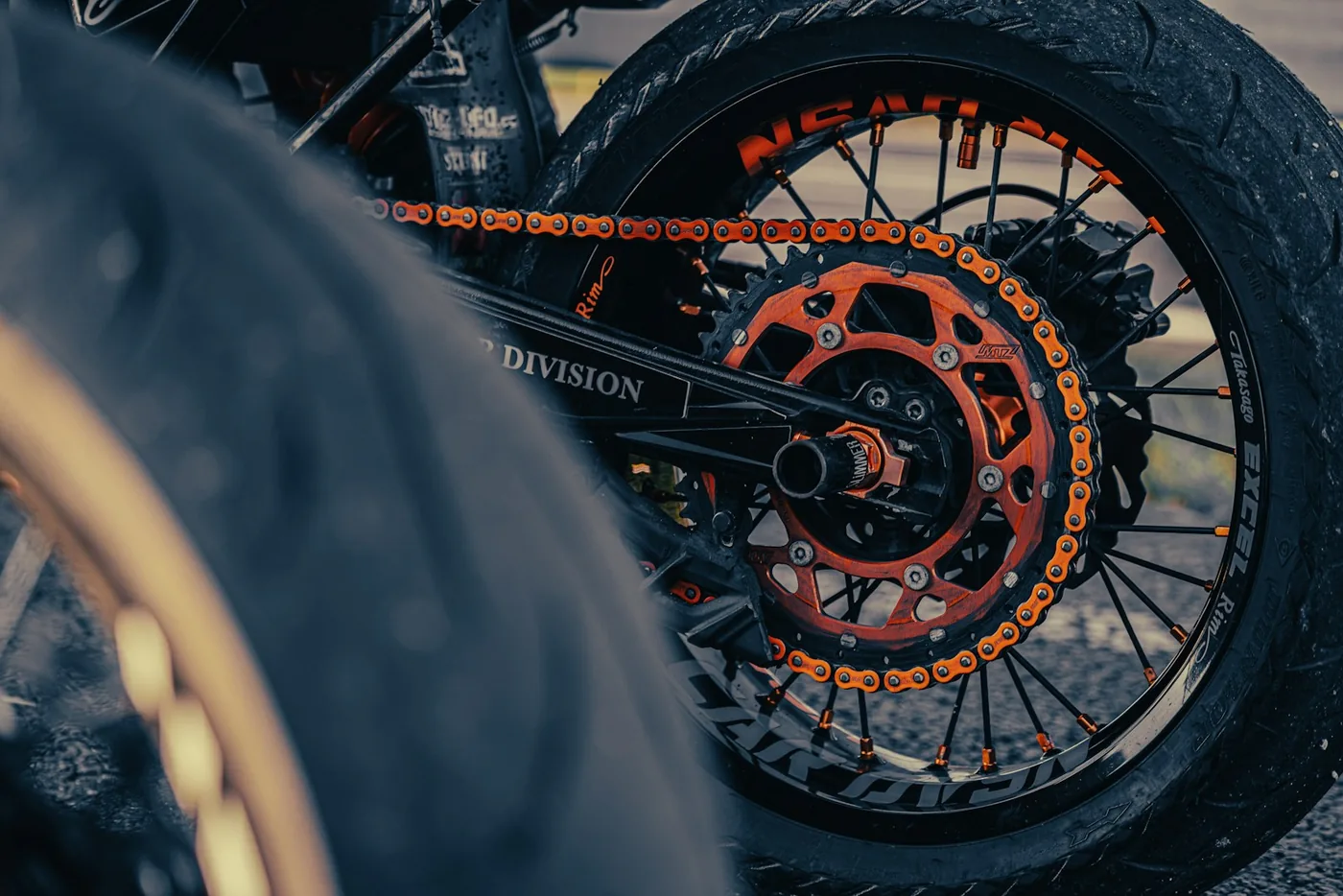
Every retailer on the first page of a search sells a boxed set of three. That is a packaging convention, not a rule about how final drive works, and it exists because a set is easier to price and photograph than a shelf of options.
Our own listings were built the other way round. The drive sprocket was one line, the rear sprocket another, the chain a third; the drive sprocket was offered across a spread of sizes, and one machine carried three separate rear-sprocket lines covering a road range, a single intermediate size, and a larger range meant for acceleration. A boxed kit cannot show that.
The practical effect is simple. If your chain is good and only the rear sprocket is hooked, ask for the rear sprocket. The model pages are the place to start looking: Honda CBR150R, Honda CBR250R, Honda Wave125, Honda Sonic 125 and Yamaha SR400. The hub and carrier a rear sprocket bolts to are on our motorcycle wheel parts page.
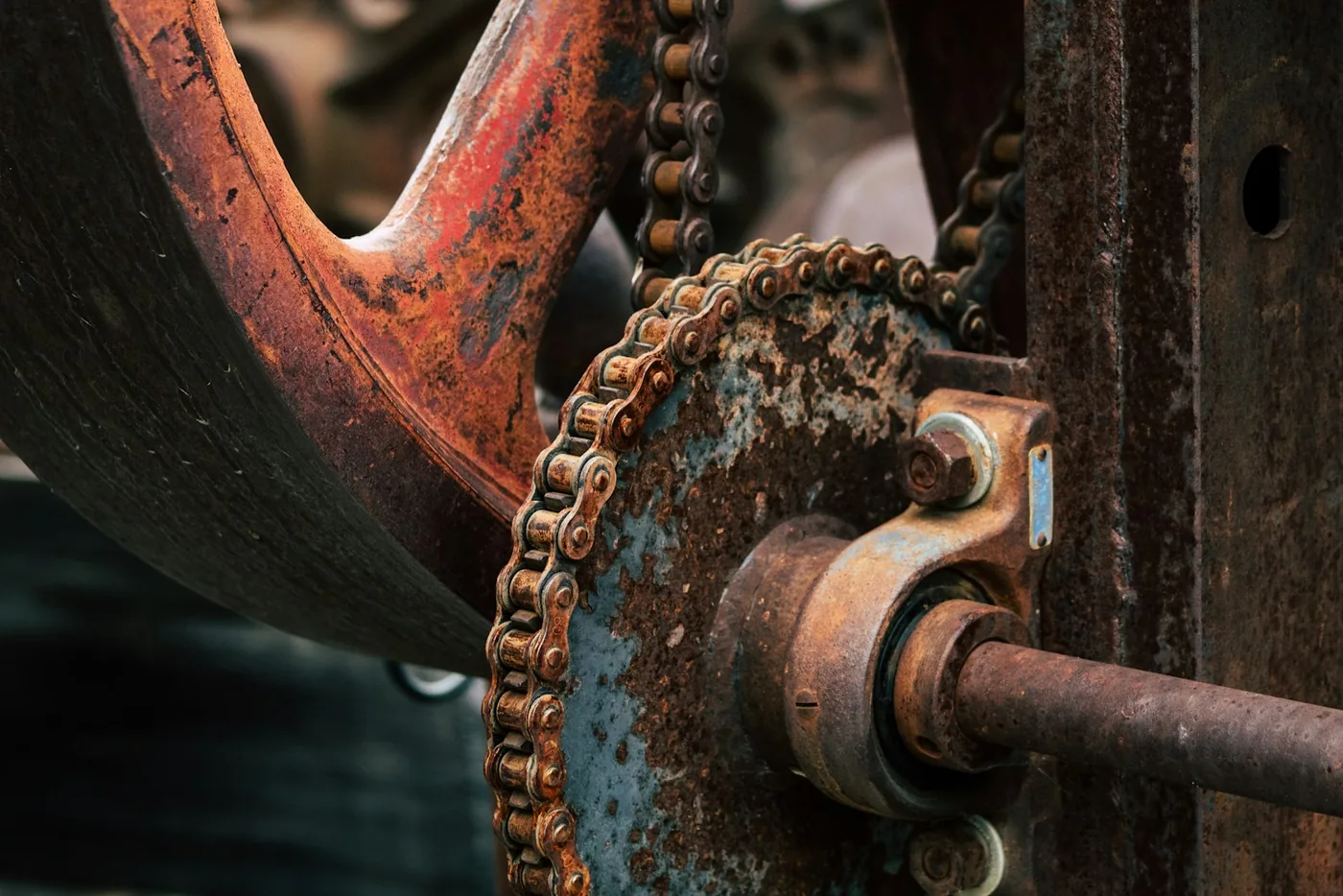
What travels with a chain change
Fitting a new sprocket to a worn chain is a false economy that most people only make once. The stretched chain sits badly in the fresh teeth and hooks them quickly, so the money saved goes straight back into the next sprocket.
The parts around the drive are worth thinking about too. Our archive listed an aluminium front sprocket cover and a chain cover on the classic singles, and chain-guard items among the genuine Honda Dax parts. If yours is cracked, put it in the same enquiry.
Chain itself is a manufactured product with real engineering behind it. Daido Kogyo, the Japanese maker behind the D.I.D name, produces drive chains, engine timing chains, rims, spokes and wheels, and describes its own core competencies as press and plastic forming and surface treatment in pursuit of abrasion resistance. The same maker supplies chains for international racing and for general use.
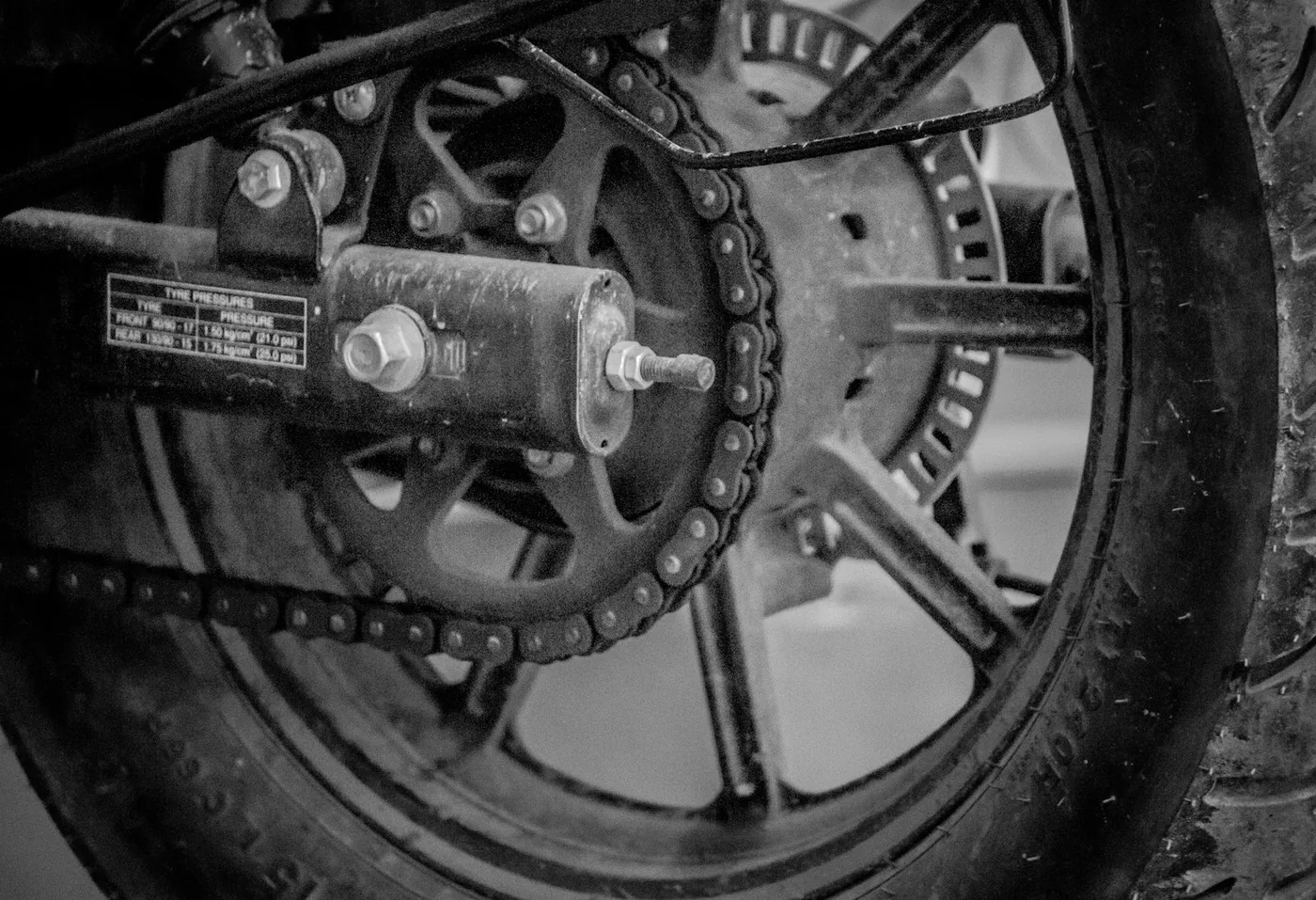
Questions we are asked about sprockets and chains
How do I tell what pitch is on my machine?
Photograph the chain and the rear sprocket, and look for markings stamped on the chain side plates. Many chains carry their size there, and where they do not, the frame number and a clear picture usually resolve it. Working from the frame number is set out on our page about identifying a part by frame number.
Should I choose a steel or an aluminium rear sprocket?
It is the only material question the kit trade asks, and on machines of this weight it is rarely the important one. Aluminium is chosen where rotating mass matters enough to trade away service life, a large-capacity racing calculation. Pitch, condition and gearing come first here.
Can you supply the small pitches at all?
The smaller chains and sprockets are ordinary shelf stock here, which is much of why people write to us about them. Our listings covered racing chain and small-pitch sprockets alongside the larger ones, and the 4Mini parts page explains how we work when a machine sits outside the Western catalogues.
Asking us to price a sprocket or a chain
Send the part number if you have one. Otherwise say which piece you want by name, add the frame number, tell us what pitch is fitted now and what the machine is used for, and say whether the chain is going in the same box as the sprockets.
Finish with the destination country and the quantity. A photograph of the worn part is worth sending even when you are sure of the description. Our drivetrain quotation request takes all of it, and the price comes back in Thai Baht by email.