
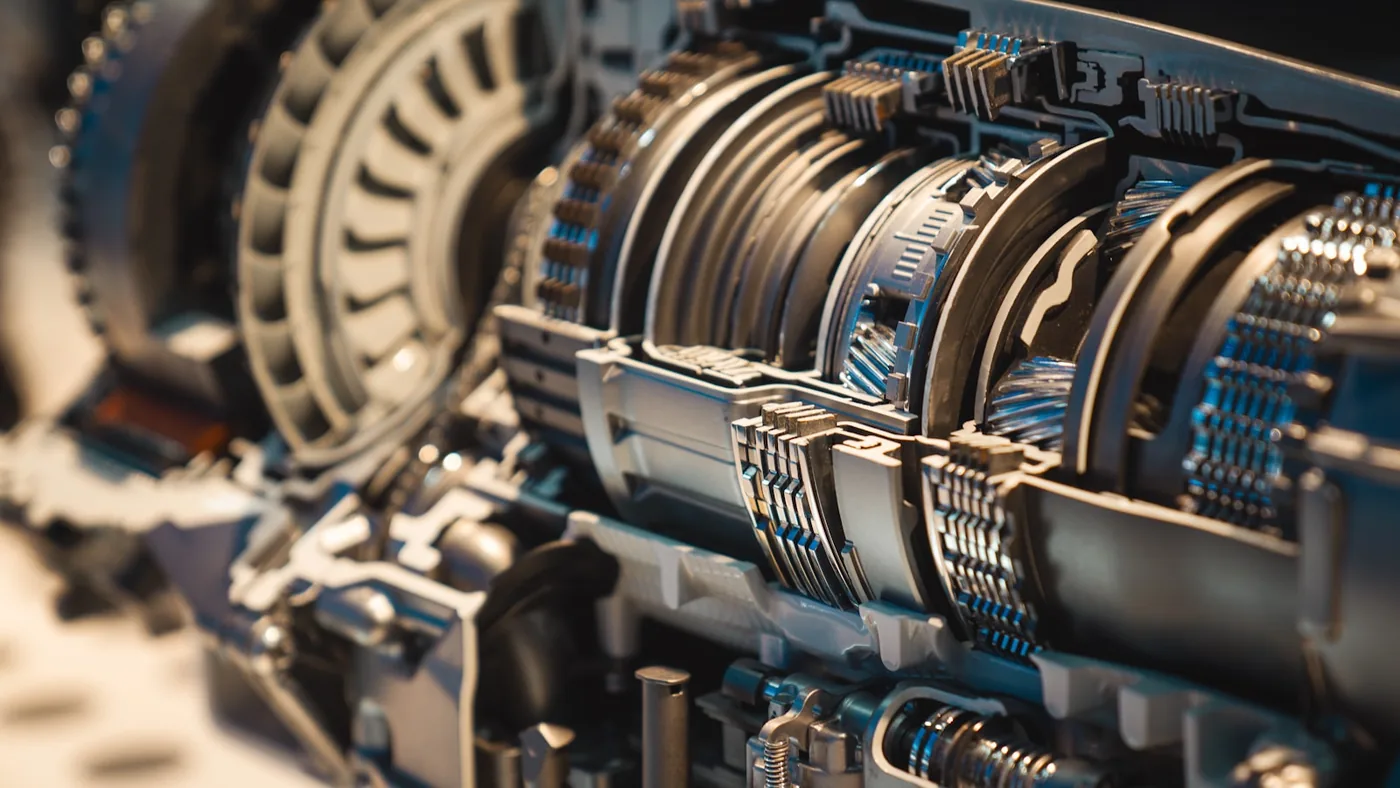
Motorcycle transmission parts, on the machines we supply, are not something you unbolt and swap. The gearbox lives inside the engine cases, sharing its oil with the crankshaft, so almost every order that starts here ends with an engine on the bench.
Motorcycle transmission parts are an engine job, not a shelf purchase
Search the term and you will find catalogues built around American V-twins, where the gearbox is a separate unit in its own housing with its own oil. On those machines you buy a whole box off a shelf. That is not the arrangement on a horizontal Honda-pattern single, an underbone, a KSR110 or a CBR150R.
Here the shafts, gears and selector mechanism sit inside the same castings as the crank, and on wet-clutch machines the clutch runs in the same oil. Nobody sells that as one item because it is not one item. When somebody writes to our parts counter about a gearbox, we are usually pricing internals plus the sealing that comes off with them.
What sort of transmission job is this, and what does finding out cost
The decision underneath nearly every enquiry is whether to open the engine. The table is arranged by job rather than by part, because the part is unknown until the cases are apart. It is a routing table, not a fitment chart; we do not issue interchange charts, for reasons our 4Mini parts page sets out.
| What you are trying to change | What has to come apart | What you are actually buying | What else is disturbed | What we need to price it |
|---|---|---|---|---|
| It will not select a gear, or jumps out of one | Cases, in almost every instance | A fork, a drum, or a gear with worn dogs. Unknown until it is open | Case gaskets and seals, often bearings too | Frame and engine numbers, and which gear misbehaves |
| A noise that follows road speed rather than engine speed | Cases | Often a bearing rather than a gear | The same gaskets and seals | Both numbers, and whether the noise is there in neutral |
| The shift pattern, or where neutral sits | Cases | A different shift drum, and what comes with it | The neutral switch arrangement | Engine number, and a photograph of the shift-side cover |
| How many ratios there are, or how close they sit | Cases | A gearbox as a set, not a single gear | Clutch and final drive both want rethinking | Engine number, what the bike is for, what is fitted |
| Overall gearing only | Nothing internal | Sprockets, which is a far smaller job on another page | Chain length | This row stops here and goes to sprocket kits |
| Somebody has already mixed parts from several engines | Cases, and probably more than once | Whatever physically matches what is in there | Everything | Photographs of the internals, and both numbers |
The shift drum is the part most owners have never heard of
Gears get the attention and the drum causes the trouble. It is a cylinder with tracks machined into it; the selector forks ride in those tracks, and as it indexes round it slides the forks and locks a different pair of gears together. The gear-change spindle and its ratchet turn foot movement into that indexing, one step at a time.
Two consequences follow, and neither appears in the catalogues. The pattern is a property of the drum, so a machine can move from a rotary change to a return change, or shift neutral from the bottom to between first and second, without a gear being altered. Sellers in this class list the pattern in the product title, which tells you it is a choice rather than a fixed feature.
The second consequence is that the neutral switch travels with the decision. Listings for six-speed kits of this kind describe having to move the neutral switch rotor off the standard drum onto the supplied one. If your machine has a neutral lamp, that arrangement is part of the job.
Noise, refusal to shift, and jumping out of gear
These are the three symptoms we are sent, and from outside the engine they are not distinguishable. A worn selector fork, a dog-worn gear, a drum that is not indexing cleanly and a failing bearing can all produce the same complaint from the saddle. Anyone who names the part from an email description is guessing.
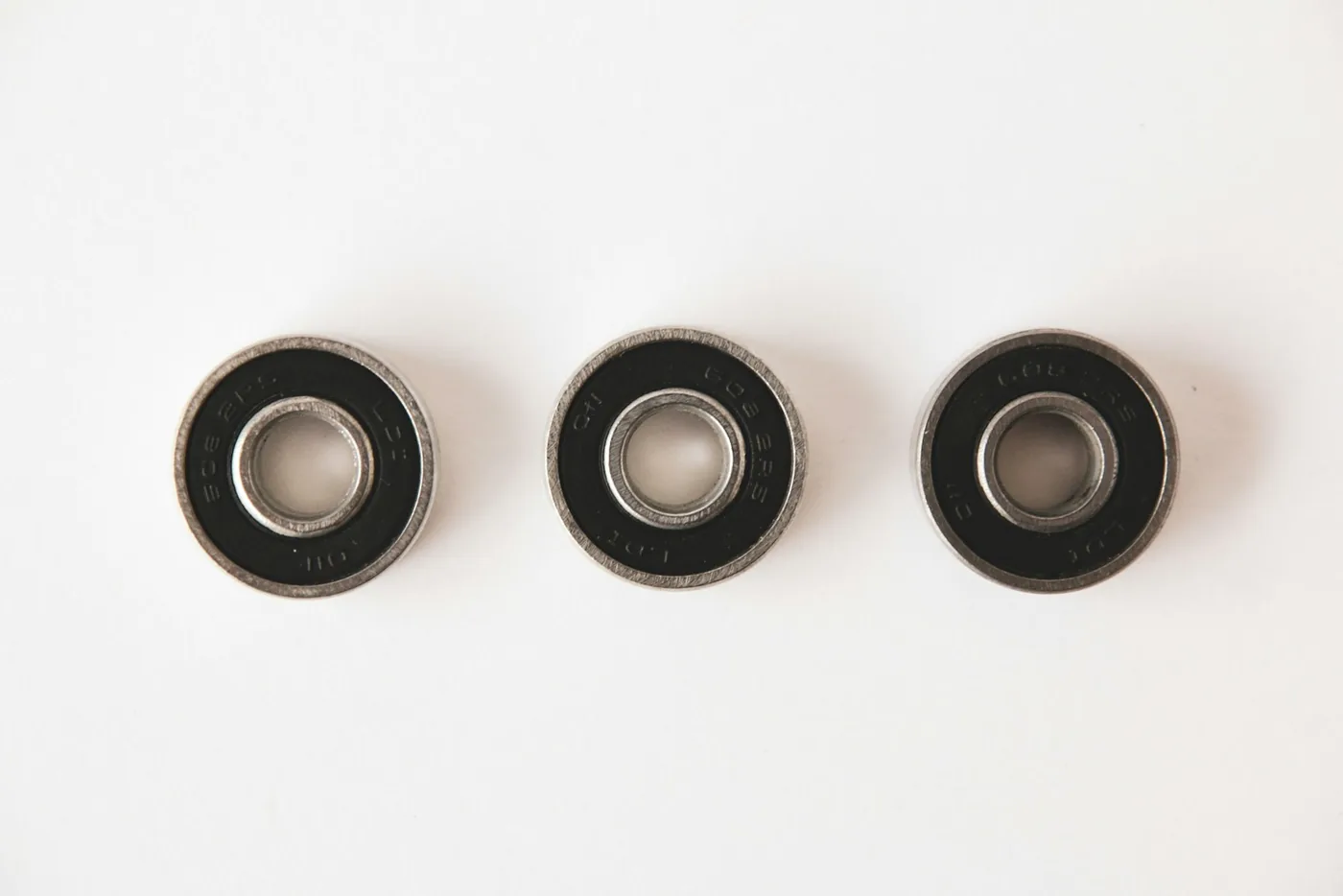
Bearings deserve their own mention, because the shafts turn in them inside the same cases. NSK, a Japanese bearing manufacturer, publishes a bearing troubleshooting guide distinguishing flaking, peeling, scoring, pitting, creep and corrosion, with sound clips for race noise, cage noise and contaminant noise. That taxonomy exists because such things are told apart by inspection, not by description.
The practical upshot is that a diagnosis usually costs a strip. That is why we would rather quote the sealing at the same time as the internals: the gasket set comes off whichever part turns out to be at fault, and buying it twice is a wasted shipment.
What this counter has actually handled
Our archived Wave110 tune-up listing carried two racing transmissions described by their ratio pairs, a gearshift drum listed as one down and three up, and a conversion cover for a hand clutch. The Monkey and Dax own-brand listing carried a race transmission of its own. We are not reprinting the ratios; published figures become specification claims, and we do not make those from an old listing.
What matters is the shape of it. Gearbox internals for small Japanese and Thai machines have been ordinary counter business here for twenty years, while almost nobody writing in English about transmissions served this class. How many speeds a machine has varies widely across the names we deal in, and the numbers settle it rather than the badge.
Questions we are asked about gearboxes
Do I really have to split the cases?
For gears, dogs, forks, the drum or a shaft bearing, yes. The kickstart quadrant and the primary drive gear are in there too. Only the external gear lever and its linkage are reachable from outside, and a fault there is usually felt in the lever.
Should I change the ratios or the sprockets?
If the goal is simply different overall gearing, the sprockets are the cheap answer and the engine stays shut. Look at sprocket kits first. Ratios are worth changing when you want the steps between gears altered, and the reasoning behind that sits with tuning parts.
The engine was rebuilt by somebody else. Does that matter?
A great deal. Mixing internals from several model numbers in one set of cases is normal in this class, so a lookup from a model name can be wrong. Photographs of what is in there, plus both numbers, beat any description. Identification is covered on our engine parts page.
Is the clutch part of this?
It sits in the same oil and comes off in the same strip, but it has its own page: motorcycle clutch parts covers centrifugal and manual operation and the conversions between them.
Telling us enough to price gearbox work
We need the engine number and the frame number, a part number if you have one, otherwise the part name alongside those numbers, plus the destination country and the quantity. Say which gear misbehaves, whether a noise follows road speed or engine speed, and whether the engine has been apart before.
Photographs earn their place here more than on most pages: the internals if the cases are open, the shift-side cover if they are not. Put that into the drivetrain quotation request and we will work out what can be sourced in Thailand or Japan and what it costs delivered.