
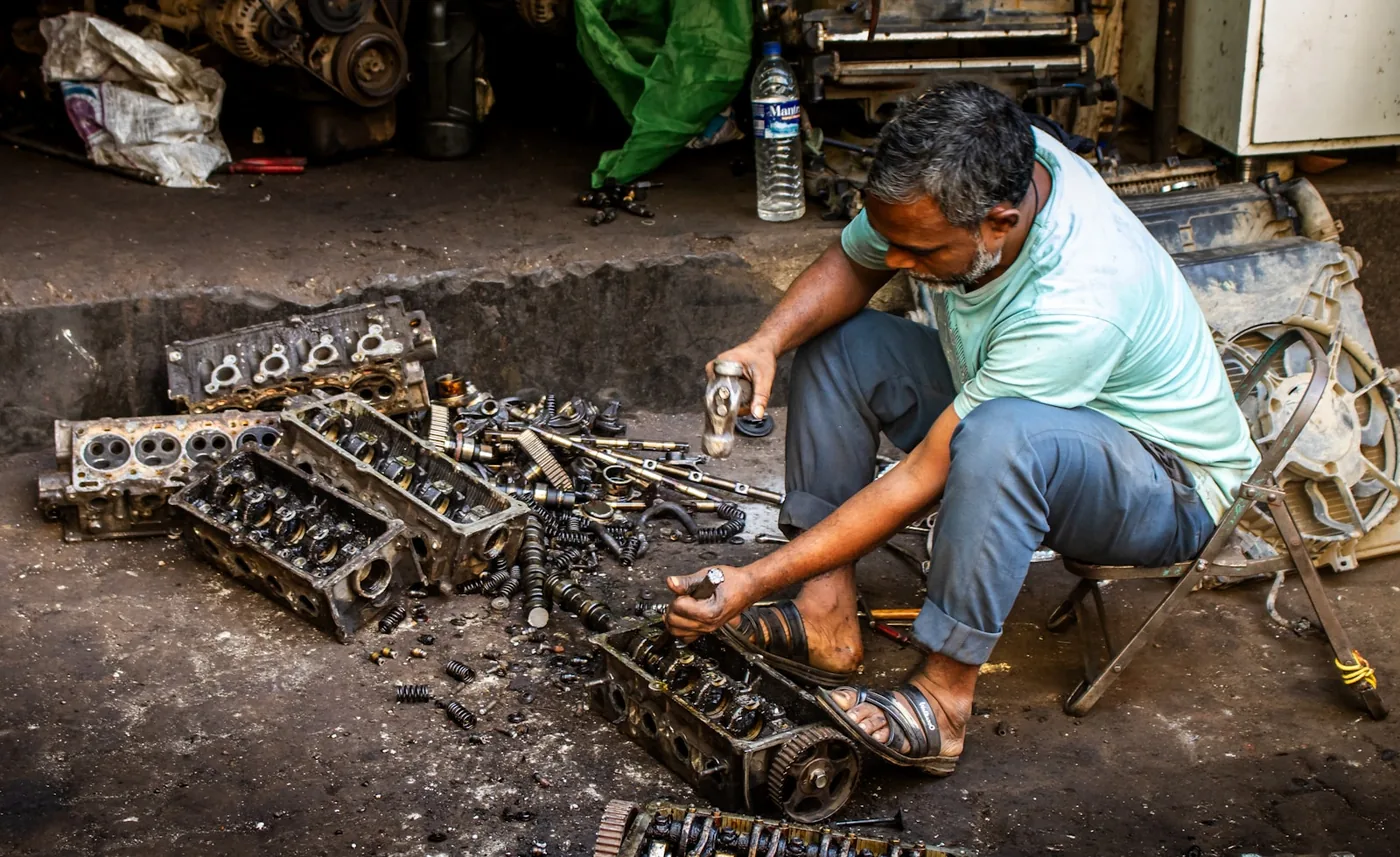
Motorcycle engine parts are bought against the unit actually bolted into the frame, and on the machines we handle that unit has often been changed at least once. The number stamped into the casing is the starting point, not the year on a registration document.
The engine may not be the one the frame left with
Small Hondas have had their engines swapped, rebuilt and transplanted for the better part of fifty years. A bike whose frame points one way and whose engine points another is ordinary in this trade rather than a curiosity. Owners buy a project, fit whatever ran, and the paperwork carries on describing something no longer underneath them.
Every large catalogue online assumes the opposite. It asks for a make, a model and a year, then hands over a diagram of the engine that machine was assembled with. That is why orders for internal components so often arrive at the wrong item, discovered once the cases are open. The wider parts index is arranged the way people shop; this page sits beneath it for the identification problem engines create and other categories do not.
Which engine have you got, and where do its parts live
The table sorts the engine families that turn up under the names we deal in. It is organised by engine and identifier rather than by component, and it is not a fitment chart. Read it to work out which conversation you are having with us.
| Engine family | Machines | Identified by | Parts source | The hard part |
|---|---|---|---|---|
| Horizontal single, six-volt era | Z50 Monkey, Gorilla, ST Dax, Chaly | Engine number; the unit may not be original | Japan, plus specialist manufacture | Engine and frame disagree |
| Horizontal single, twelve-volt era | Later Monkey and Dax variants, ZB, Monkey R | Engine and frame numbers together | Japan and Thailand | Which era a component belongs to |
| Horizontal single, current 125s | Monkey 125, Dax 125 | Frame number | Japan and Thailand | Confused with the older families |
| Thai-market road engines | Wave125, Sonic 125, Zoomer | Frame number | Thailand | No fiche exists abroad |
| Thai-built sport engines | CBR150R, CBR250R | Frame number | Thailand | Market-specific variants |
| Yamaha single | SR400, SR500 | Frame number | Japan | Long production, many changes |
| Kawasaki small capacity | KSR110, Ninja 250R | Frame number | Thailand and Japan | Absent from the current range |
The engine number, and what we do with it
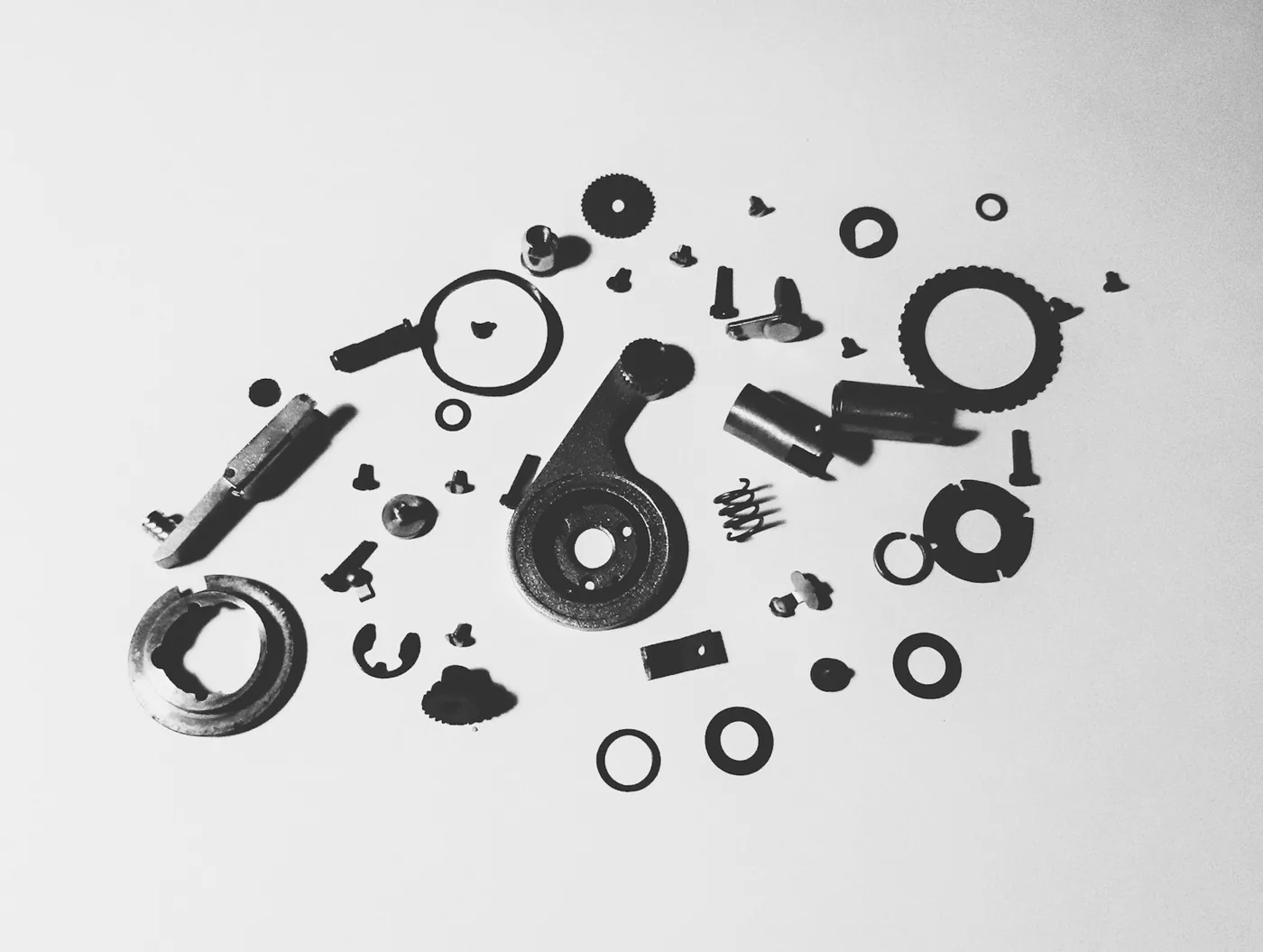
The engine number is a separate identifier from the frame number, stamped into the engine itself on a flat cast area of the casing. It is not a serial number for the motorcycle. It describes the unit, which is why it is the more useful of the two once the unit has been changed.
We will not publish a decoding table for it. Nobody has supplied one we can stand behind, and a chart assigning years or specifications to characters would be an invention. What we do instead is take the number as stamped, with a photograph of the stamped area, and work from the supply source. The frame number still governs everything hanging off the engine, and the frame number page covers how we use it.
If the casting is dirty, clean it before photographing rather than reading it by torchlight. A transcription error costs far more than a wet cloth.
One architecture across a class, and two countries behind it
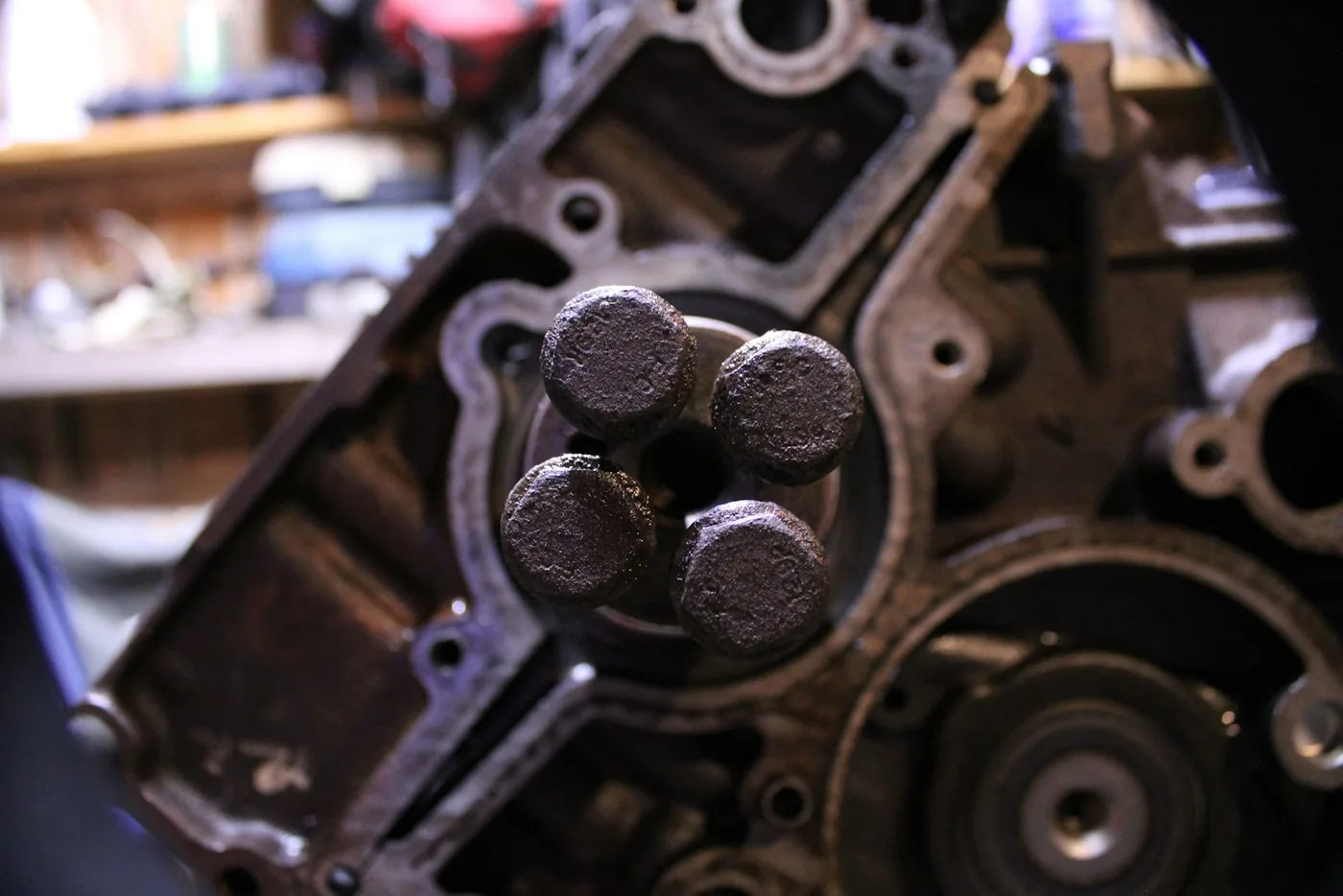
A Monkey, a Gorilla, a Dax and a Chaly are one class rather than four models because they were built around a shared horizontal single-cylinder layout. Buyers notice the consequence quickly: the engine catalogue behaves like a family catalogue while the chassis catalogue does not. Parts travel between models inside the engine in a way mudguards never will.
We will not publish an interchange chart on the strength of that. Our 4Mini parts page sets out the refusal and the reasoning, and engines are where an unsupported interchange claim does the most damage. We check what is obtainable for your engine and your frame, and say what we find.
Geography follows the same split. The older families draw on Japan and on specialists who have kept making for them; the Thai-market road models were built here and their engine parts have stayed here. That reflects where the industry put its factories rather than a pricing trick.
The Japan Automobile Manufacturers Association, the industry’s own representative body, publishes on Japanese motor manufacturing as a system reaching well beyond Japan. Thailand has its own apparatus: the Thailand Automotive Institute, whose site is principally in Thai, runs testing, conformity assessment, training and an automotive information centre. The full argument about where a Japanese-brand part comes from sits on our Japanese motorcycle parts page.
An engine job is rarely a single part
Most engine enquiries name one item and turn into several. That is the shape of the work rather than upselling: once the cases or the head are open, the sensible order covers what is exposed.
Four of those neighbouring decisions have their own pages, so this one hands over. If the tune is what you are changing, camshaft upgrades is the place. For displacement or a worn bore, start at piston kits. Sealing is dealt with under gasket sets, and the drive side belongs with clutch parts.
Ask about all of them at once if the engine is coming apart anyway, because a second shipment costs a second shipping charge.
Motorcycle engine parts: the questions we are asked
How do I know whether the engine is the original one?
Often you cannot know from documents alone, and that is the honest answer. Read both numbers and send both to us. Where they describe different generations, we work from the engine for anything internal and from the frame for anything bolted to the outside. A machine in that condition is not a problem to buy for, only a problem to guess about.
The engine number is corroded or has been polished away. Can you still help?
Sometimes. Send clear photographs of the whole engine, of both casings and of the area where the number should be, along with the frame number. Casting shapes, cover profiles and mounting arrangements narrow the field even when the stamping has gone. We will say what we can establish and what stays uncertain.
Will a part from another machine in the same family fit mine?
We do not answer that from a model name and we publish no charts claiming to. Send the engine number and we will check what the source lists against it. Where a component genuinely carries across, the check will show it; where it does not, you have saved the postage.
Sending us an engine enquiry
The most useful message contains the engine number, the frame number, what you want, where it is going and how many. If a fiche has given you a part number, include that too. Photographs of the stamped areas and of the component you are replacing carry more weight than any account of the bike’s history.
Put it into the quote form under engine and performance. We will check what the supply source in Thailand or Japan holds and answer by email with a price in Thai Baht, quoted CIF, covering the parts and the freight together. Nothing can come back to Thailand once it has left, other than for a manufacturer’s fault, so identification is worth settling while the enquiry is still an enquiry.