
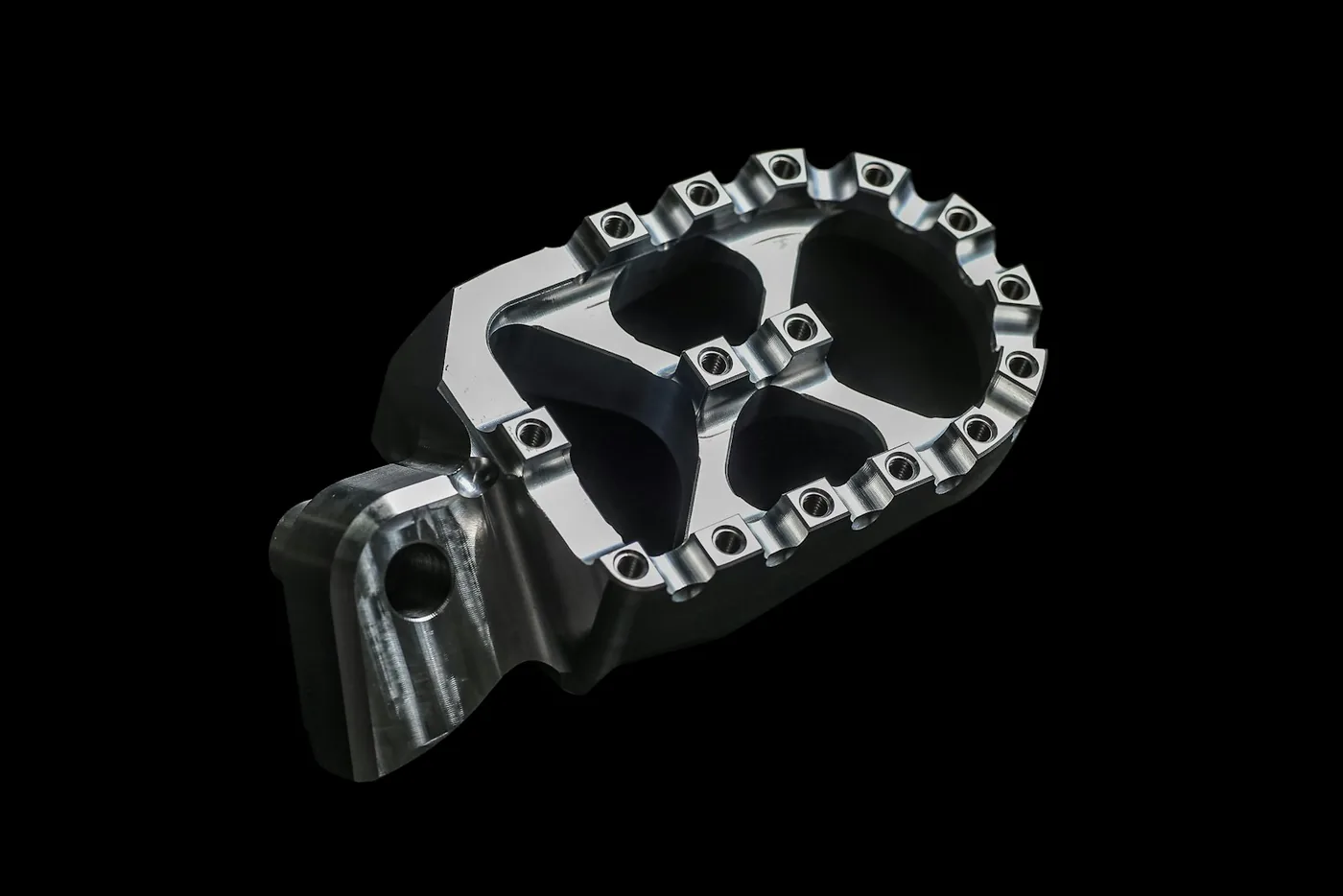
Motorcycle rearsets replace the footpegs, the rear brake pedal, the gear lever and the brackets that carry all three, then bolt to the frame in their place. That is an alteration to the machine rather than an accessory, and it is worth knowing what travels with it.
What motorcycle rearsets actually replace
A rearset is not a footpeg. It is a plate on each side of the machine carrying the peg, the pedal or the lever, along with every mounting the standard hanger used to hold. Fitting one means taking off an assembly, not swapping a component.
Our own listings have carried, for one machine, an aluminium rearset annotated as requiring the left fairing to be cut and another with no such note against it. Two options side by side, and only one can be undone. We have found no other catalogue that warns a buyer about that.
Rearsets sit alongside the other groups on our motorcycle parts page and behave like none of them. If the panel itself is what you need, that belongs on our fairing and bodywork page; here it matters only because a plate may ask you to cut one.
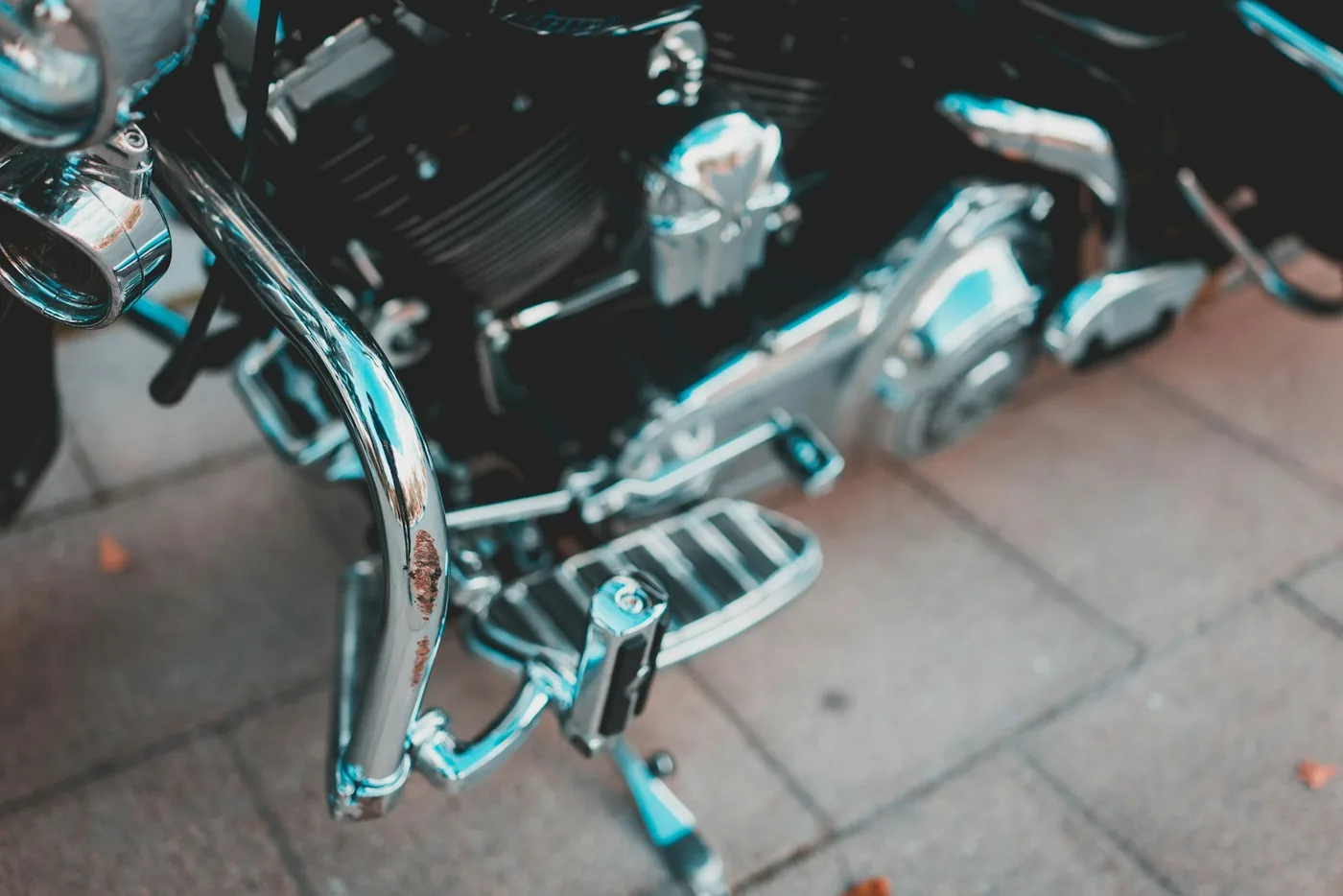
Rearset, rear set and backstep are one shelf
Two trades named this part separately and neither has given way. English-language retailers say rearset or rear set; the Japanese tuning trade says back step, and its catalogues list step kits and wide step kits under that heading. Our own archive uses both words on the same site, because it was written from both sources.
This costs buyers money. Someone who learned the word from a Japanese catalogue and someone who learned it from an American retailer type different strings, find different shops, and each conclude the part does not exist for their machine. If you are working from a Japanese listing, our parts from Japan route is where to start.
What kind of step change are you actually asking for
Every retailer treats this as one product. It is at least six different jobs, and which one you are on decides what else must change. Read the fourth column before the first.
| What you are changing | Typical on | What it replaces | What it can drag with it | What we need to quote it |
|---|---|---|---|---|
| Bolt-on road plates | Faired small and middleweight sport machines | Pegs, brake pedal, gear lever and their brackets | Brake light switch, gear linkage, pillion hangers | Frame number, and photographs of both existing plates |
| A plate that needs bodywork cut | Offered as the alternative on the same machine | The same, plus part of the left fairing | A permanent alteration to a panel you may be buying too | Frame number, and whether the machine keeps its fairing |
| Race rear set | Track machines | The road plates entirely | Lighting and mirror mountings the old plate carried | Frame number, and whether it is road or race |
| Backstep on a 4Mini | Monkey, Dax and their relatives | The standard step assembly | Exhaust and sidestand mountings shared with the old plate | Frame number, and a photograph of the right-hand side |
| A subframe carrying the steps | Small commuters rebuilt around a new rear end | The rear frame section, not merely the pegs | The seat or tank cover that the subframe assumes | Frame number, and what else at the rear is changing |
| Pegs and rubbers only | Classic singles kept standard | The pegs and their rubbers | Nothing | Frame number, and which side |
What moving the pegs drags with it
The pegs never travel alone. The old plate was a mounting point for other things, and the new one may not carry them in the same place. We ask about these rather than assume them.
- Does the rear brake light switch still reach the pedal, and does its spring have anywhere to hook?
- Is the rear brake worked by a rod or by a master cylinder, and does the plate carry the cylinder?
- Will the gear linkage reach, and are you keeping the standard shift pattern?
- Were the pillion pegs and their hangers hung off the plate you are removing?
- Did the old plate also hold the exhaust bracket or the sidestand?
None of that is a fitment table. Our 4Mini parts page sets out why we decline to issue an interchange chart we cannot stand behind. Where the rear brake is itself at fault rather than misplaced, start on motorcycle brake parts.
The machines in our range that have carried them
Aluminium rearsets have been listed against the faired Hondas we handle, in silver, black and gold, on the race listings as well as the road ones. Those three finishes were three separate line items rather than one part with a colour option, so tell us which you want at the outset. The same shelf covered the smaller Thai machines and one Kawasaki twin, that last described simply as adjustable.
Which plate suits which machine is settled by the frame number and not by the model name, so treat the model pages as the starting point rather than the answer: Honda CBR150R, Honda CBR250R, Honda Sonic 125, Honda Wave125 and Kawasaki Ninja 250R.
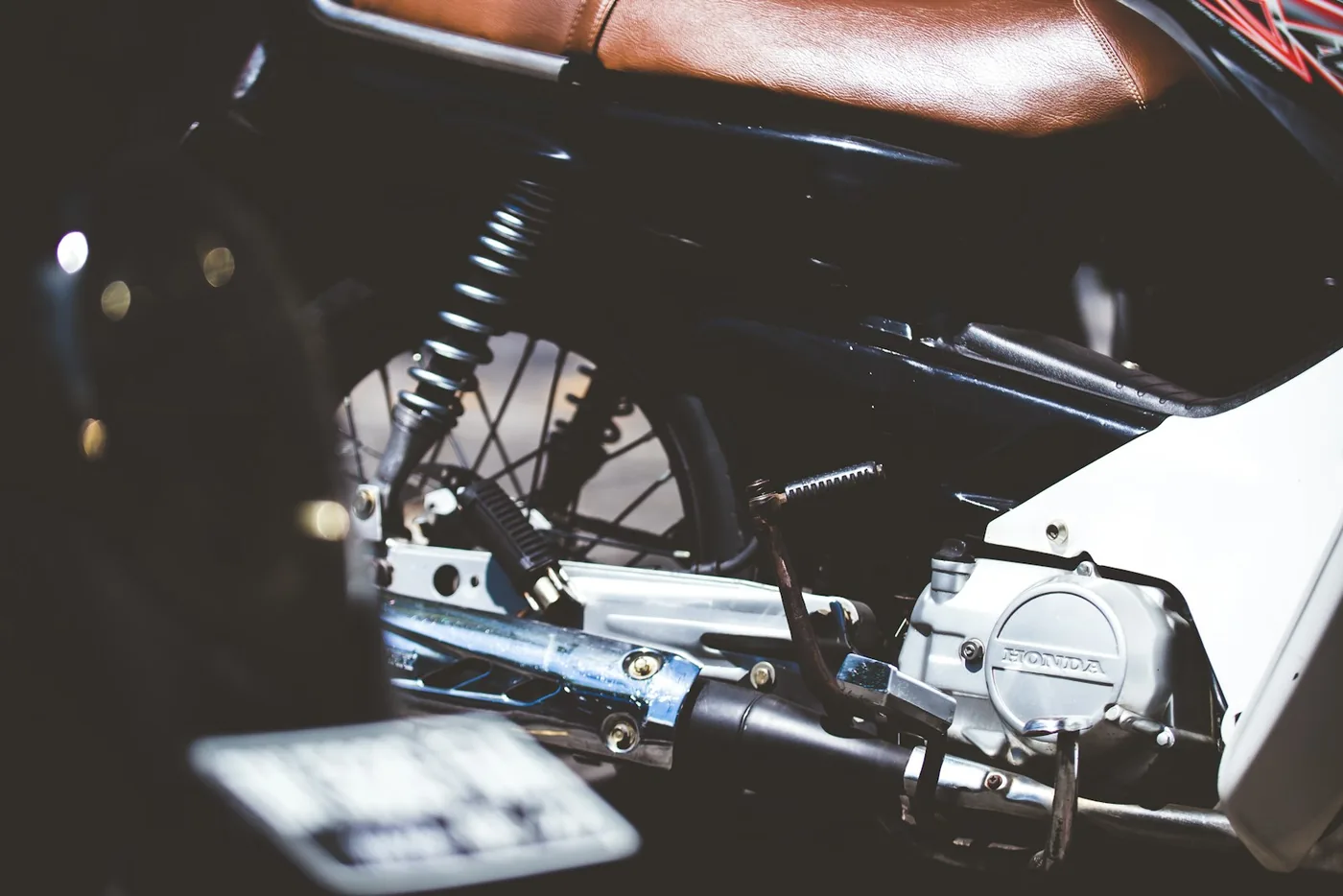
For the Honda Monkey and Honda Dax the part is a backstep, one of which we make here under our own name. On the Honda Zoomer the mechanism differs again: the step position was changed by a subframe, listed both with aluminium steps and without, so the decision is about the rear of the machine rather than the pegs.
Not every machine wants one. Our Yamaha SR400 and Yamaha SR500 listings carried foot pegs and footpeg rubbers and no rearset at all, which is the honest position for a classic single.
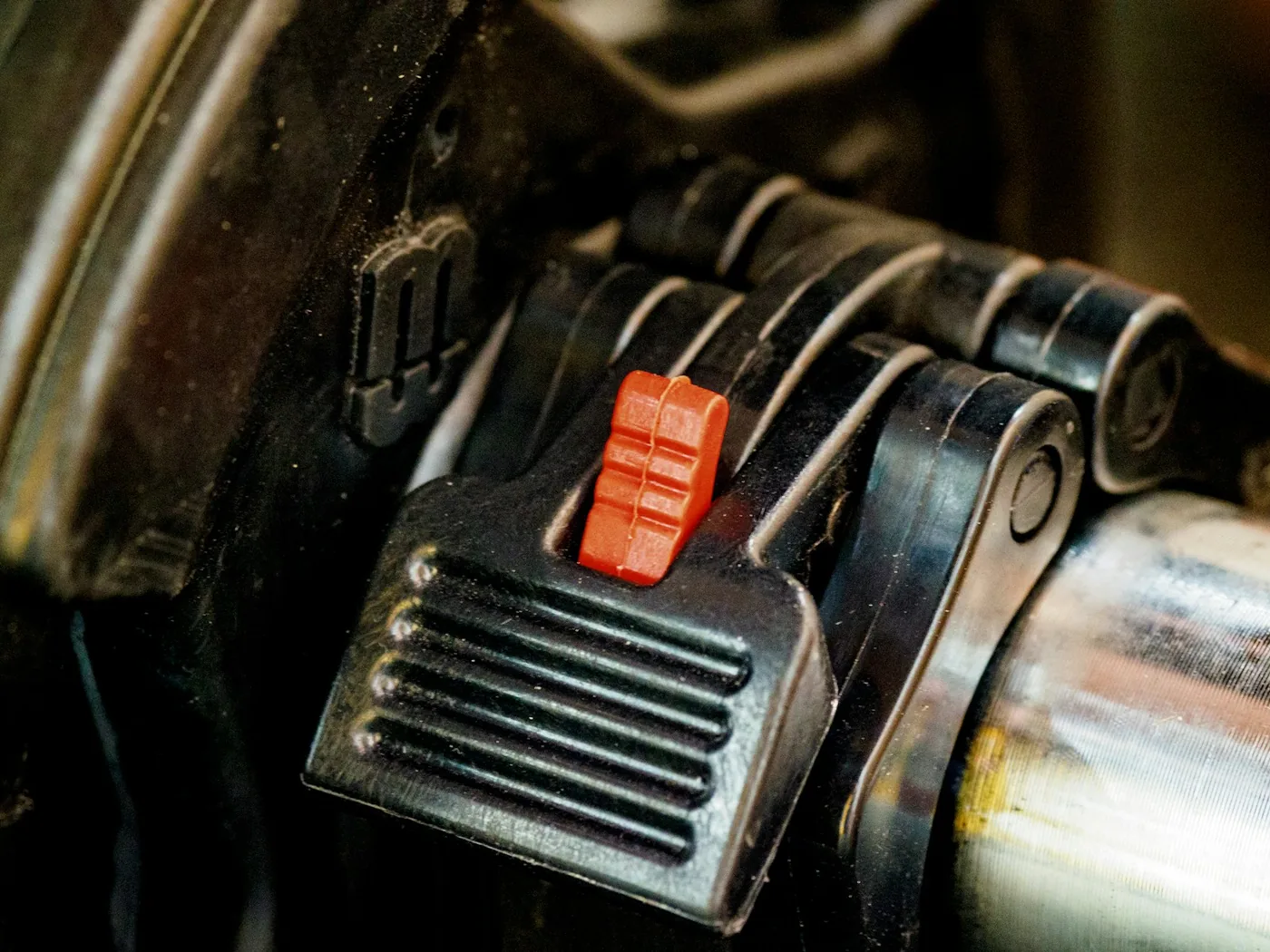
Questions we are asked about rearsets
Why do the pegs move up and back at all?
Ground clearance, mostly, and the sport’s own rulebook shows that this is treated as a measurement rather than a preference. The FIM’s Grand Prix World Championship regulations require a machine to be leanable to fifty degrees from vertical with nothing but the tyre touching the ground, and set a minimum rounded-end radius for footrests.
Those rules govern Grand Prix racing, not your machine, and nothing we supply is offered as meeting them. They explain the category: the foot controls are among the first things to touch down.
Can I keep the fairing on and still fit a rearset?
Sometimes, which is precisely why it must be asked before anything is ordered. Our archive shows a cutting option and a non-cutting option for one machine, so the answer turns on which plate can be had. Work from the number stamped on the frame rather than the model name, as our page on identifying a part by frame number explains.
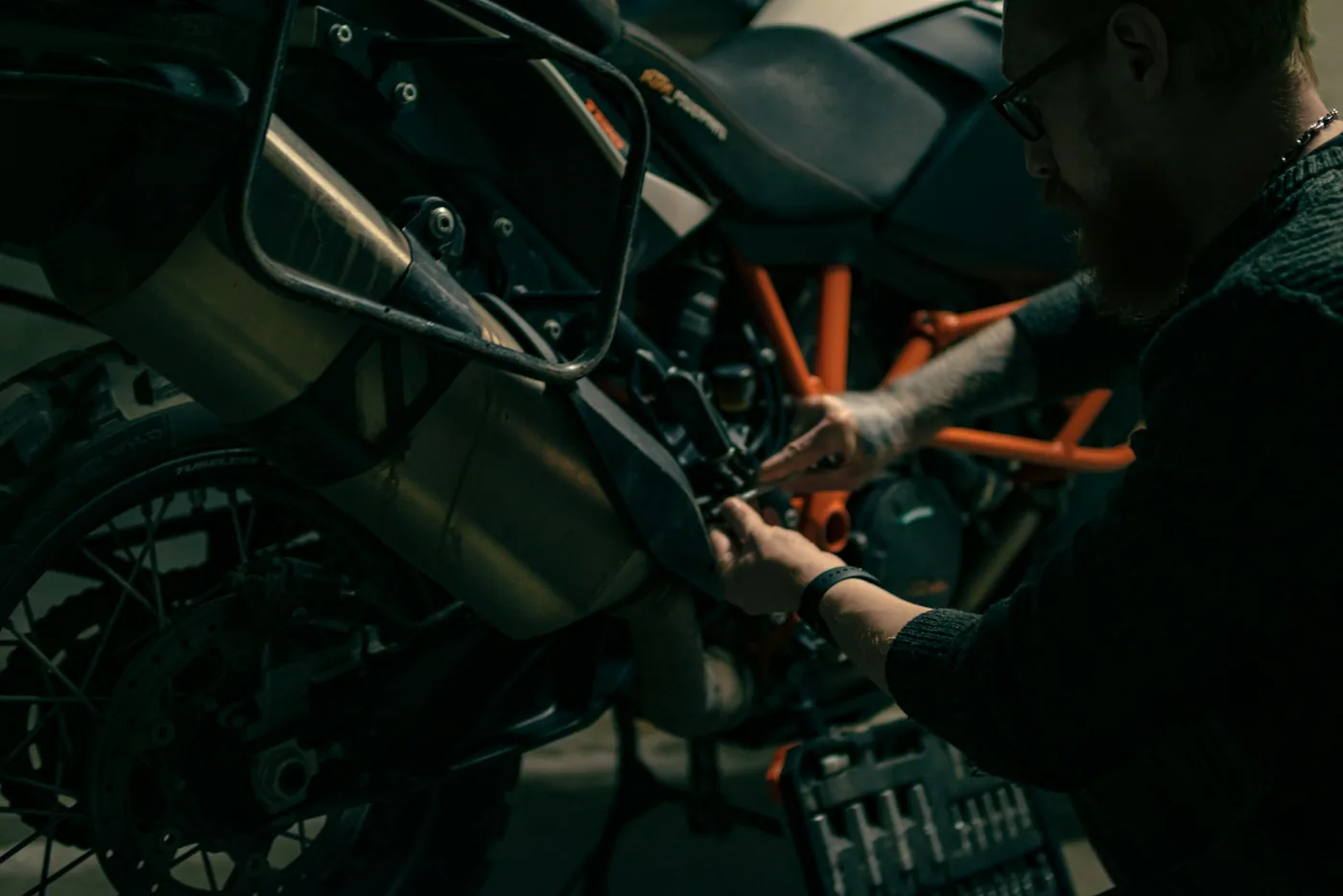
What to send us for a rearset quotation
If you have a part number, that alone is enough. Otherwise give us the name of the part with the frame number of the machine, say whether it is ridden on the road or on a track, and tell us whether the fairing is staying on. Photographs of both plates, from the side, save more correspondence than a description.
Add the destination country and how many sets you want, then send it through our rearset and accessories quotation form. We price in Thai Baht by email once we have checked the supply source in Thailand or Japan.